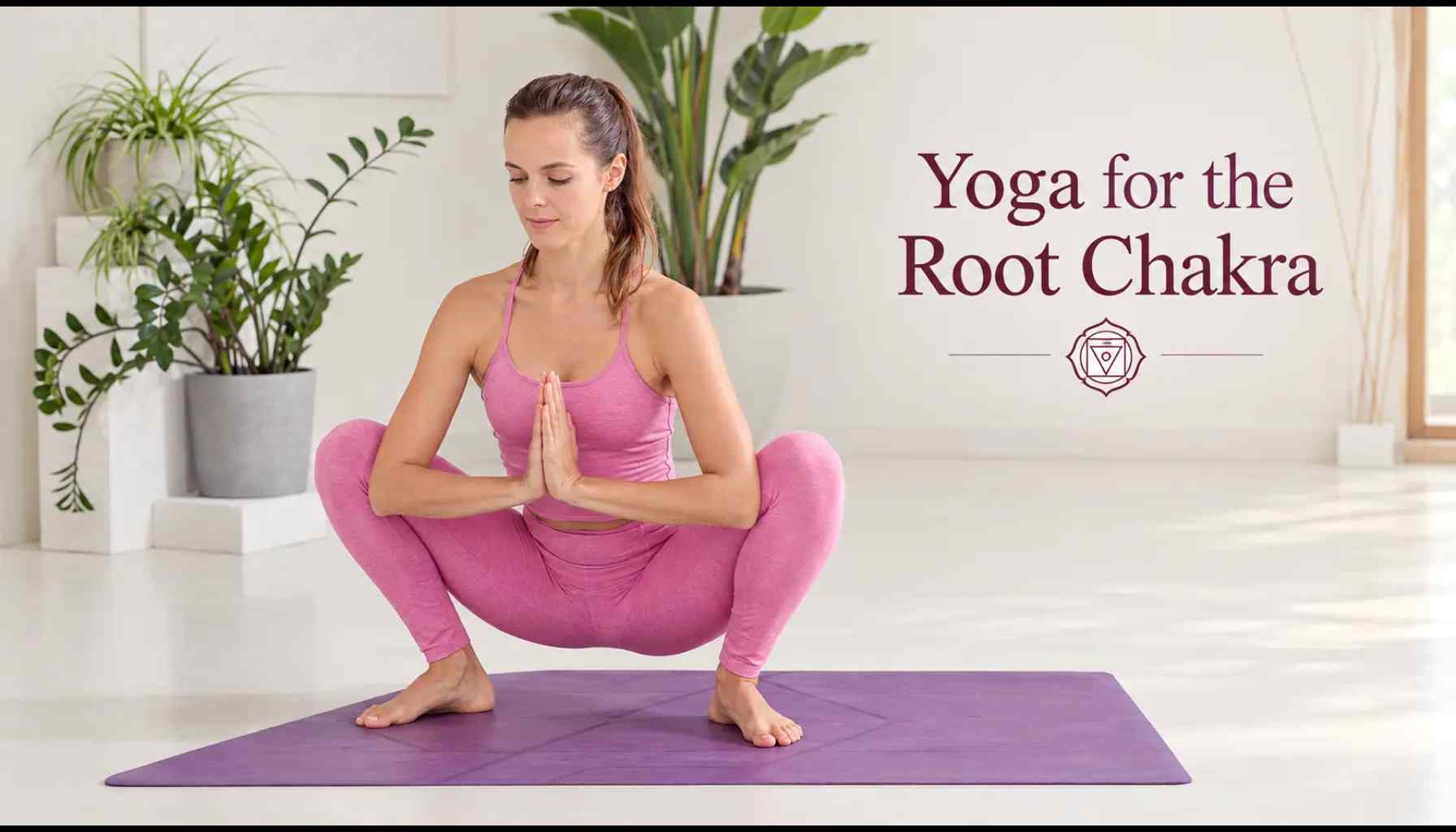
Yoga for the Root Chakra: Feel Grounded
Yoga for the root chakra is a gentle way to rebuild the feeling of safety, stability and belonging that many of us lose when life gets stressful. The root chakra, or Muladhara, serves as a base of the energetic system in yoga philosophy. Yoga for the root chakra is recommended by many yogis to help find balance when life becomes unstable. This guide covers what it represents, how to recognise imbalance, and six grounding poses with breath, mantra and a short flow you can do at home.
Key Takeaways
- The root chakra (Muladhara) is situated in the lower part of the spine and symbolizes safety, stability, and belonging.
- Six grounding postures, deep breathing, and the seed sound LAM are the basic elements of yoga practice.
- Practice for ten to fifteen minutes daily instead of having one prolonged session.
Understanding Yoga for the Root Chakra
Root Chakra is the first of seven major chakras in yoga philosophy. It is called Muladhara in Sanskrit language. The symbol of the root chakra is a red four-petal lotus, and it is traditionally linked to the adrenal glands. The chakra is located at the bottom of spine, close to coccyx and pubic bone. It corresponds to:
- Element: Earth, which stands for stability and solidity
- Colour: Red
- Seed sound (bija mantra): LAM
- Themes: Safety, security, survival needs, belonging and trust
Signs Your Root Energy May Be Out of Balance
There are two general types of problems that have been traditionally taught.
Feelings of blockage and underactivity may include symptoms of anxiety, nervousness, fear about finances, feelings of insecurity and detachment from the environment, and fatigue in the lower body such as the legs, feet, or lower back.
Feelings of overactivity may include rigidity, resistance to change, hoarding behavior, or over-concern with material stability.
Yoga for the Root Chakra - 6 Poses
Hold each pose for five to eight breaths unless noted.
1. Mountain Pose (Tadasana)
- Stand with your feet apart at hip width and push through both feet evenly.
- Extend your spine and let your shoulders relax.
- Breathe and imagine your feet growing roots downward.
2. Easy Pose (Sukhasana)
- Sit cross-legged, on a folded blanket if your hips are tight.
- Rest your hands on your knees and lengthen your spine.
- Close your eyes and feel the base of your spine against the floor.
3. Child's Pose (Balasana)
- Kneel and bring your big toes together.
- Sit your hips back with your weight in your heels.
- Raise your arms and breathe steadily.
4. Garland Pose (Malasana)
- Stand with your feet wide and toes turned out.
- Lower into a deep squat with your palms together.
- Press your elbows against your inner knees and lengthen your spine.
5. Chair Pose (Utkatasana)
- Stand with your feet together and bend your knees.
- Sink hips back while placing the weight on heels.
- Raise hands and inhale/exhale normally.
6. Tree Pose (Vrikshasana)
- Balance body weight on one leg.
- Other leg needs to be placed on calf or inner thigh, never on the knee.
- Hands need to be joined together with eyes looking straight ahead.
If balance is difficult, rest your fingertips on a wall for Tree Pose.
Why Grounding Comes First
Many teachers choose to start with root chakra work because all other chakras are believed to be built upon it. By first practising yoga to heal your root chakra, you build a solid foundation that will make future chakra work feel more stable.
Breath, Mantra and Visualization
Even breathing. Breathe in for four seconds and breathe out for four, maintaining a consistent rhythm to soothe your nervous system.
Seed sound LAM. Chant ‘lam’ on the exhale and feel the vibration at the base of your spine.
Visualization of the red light. Visualize a red light located at the level of your sacrum, keeping you grounded.
Affirmations. “I am safe” or “I belong here” during the last resting position.
Grounding Habits Beyond the Mat
- Go barefoot on the grass or soil whenever possible.
- Eat warm, simple food regularly.
- Maintain a consistent schedule for sleeping and eating.
- Take a few minutes outside and become aware of all that surrounds you: sounds, scents, sensations.
Practice beyond poses: You can try Earth Mudra (Prithvi) through joining the tip of your ring finger to your thumb while sitting on your knees and taking deep breaths.
A 12-Minute Root Chakra Flow
|
|
|
|
|
|
|
|
|
|
|
|
|
|
|
|
|
|
|
|
|
|
|
|
|
|
|
|
|
|
|
|
Short, regular sessions of ten to fifteen minutes beat one long practice.
Benefits of Root Chakra Yoga
- Develops a feeling of stability in the legs, hips, and lower back
- Improves balance and body consciousness
- Slows the breathing rate and calms an active mind
- Helps create a daily routine
- Creates a sense of security and trust in oneself
- Gives a practice which is easy for beginners
To Conclude
Yoga for the root chakra is an easy process of slowing down, becoming calm and steady and finding yourself comfortable in your own body.
Frequently Asked Questions
1. What yoga poses help the root chakra?
The most popularly performed grounding poses include the Mountain pose, Easy pose, Child's pose, Garland pose, Chair pose, and Tree pose.
2. What foods can help heal the root chakra?
Traditionally, grounding and earthy foods have been prescribed to heal the root chakra, including root vegetables, beets, potatoes, carrots, fruits with a red tinge, and warm meals.
3. Which chakra holds stress?
Tradition most often links stress and insecurity to the root chakra, though the solar plexus and heart chakras are also associated with stress-related feelings.
4. Is yoga for the root chakra safe for beginners?
Most people can practice gently, but check with your doctor if you are pregnant or injured.
Also Read: Benefits of Yoga
By Umesh Kumar Khiri


Discussion (0)
No comments yet. Be the first to comment!
Leave a Comment
You need to login to post a comment.