Yoga at Home: Simple Beginner's Guide
Yoga at home is one of the easiest ways to build flexibility, strength, and calm without a studio membership or a fixed class schedule. All you need is a bit of floor space, a few quiet minutes, and a willingness to go slowly. This guide shows you how to set up, what to practice, and how to keep going once the novelty fades.
Key Takeaways
- Even 10 to 15 minutes of yoga at home can build strength, flexibility, and calm.
- A clear floor space and a basic mat are all you need to begin.
- Consistency matters more than intensity, so start small and build gradually.
Why Yoga at Home Works So Well
Practicing in your own space removes many common barriers. There's no commute, no schedule to match, and no pressure to keep up with a room full of people. You can squeeze in ten minutes before work or stretch out for an hour on a lazy weekend.
Another advantage of doing yoga at home is the fact that it develops your sense of listening to your own body.
Benefits of Yoga at Home
- Reduces stress and calms the mind
- Improves flexibility and posture
- Builds strength and balance
- Fits easily into any schedule
Set Up Your Space for Yoga at Home
A personal studio is not necessary – you only require an empty space of floor next to your bed or sofa.
- Select a peaceful place. It must provide you with sufficient space to stretch out your body without coming into contact with any sharp pieces of furniture. Being near a wall could help you achieve better balance in some poses.
- Select a slip-resistant surface. Though yoga mats help, you may use any non-slip carpet or even a towel for now.
- Collect basic props. You will need two yoga blocks, one yoga strap, and a blanket. Any sturdy books and belts can be used in place of these props.
- Put on comfortable clothes. Select something that would stretch easily and not interfere with your breath.
- Turn off any distracting elements. Do not look at the clock while doing yoga; set a gentle timer instead.
A Beginner-Friendly Yoga at Home Routine
Start with about fifteen minutes. Move slowly and breathe through your nose. Follow these steps:
1. Easy Pose (Sukhasana): Sit cross-legged and breathe deeply to become centered.
2. Cat-Cow (Marjaryasana-Bitilasana): Get onto all fourl limbs and arch and round your spine to awaken the spine.
3. Downward Dog (Adho Mukha Svanasana): Raise your hips while keeping your knees soft. Do foot pedaling if your calves are tense.
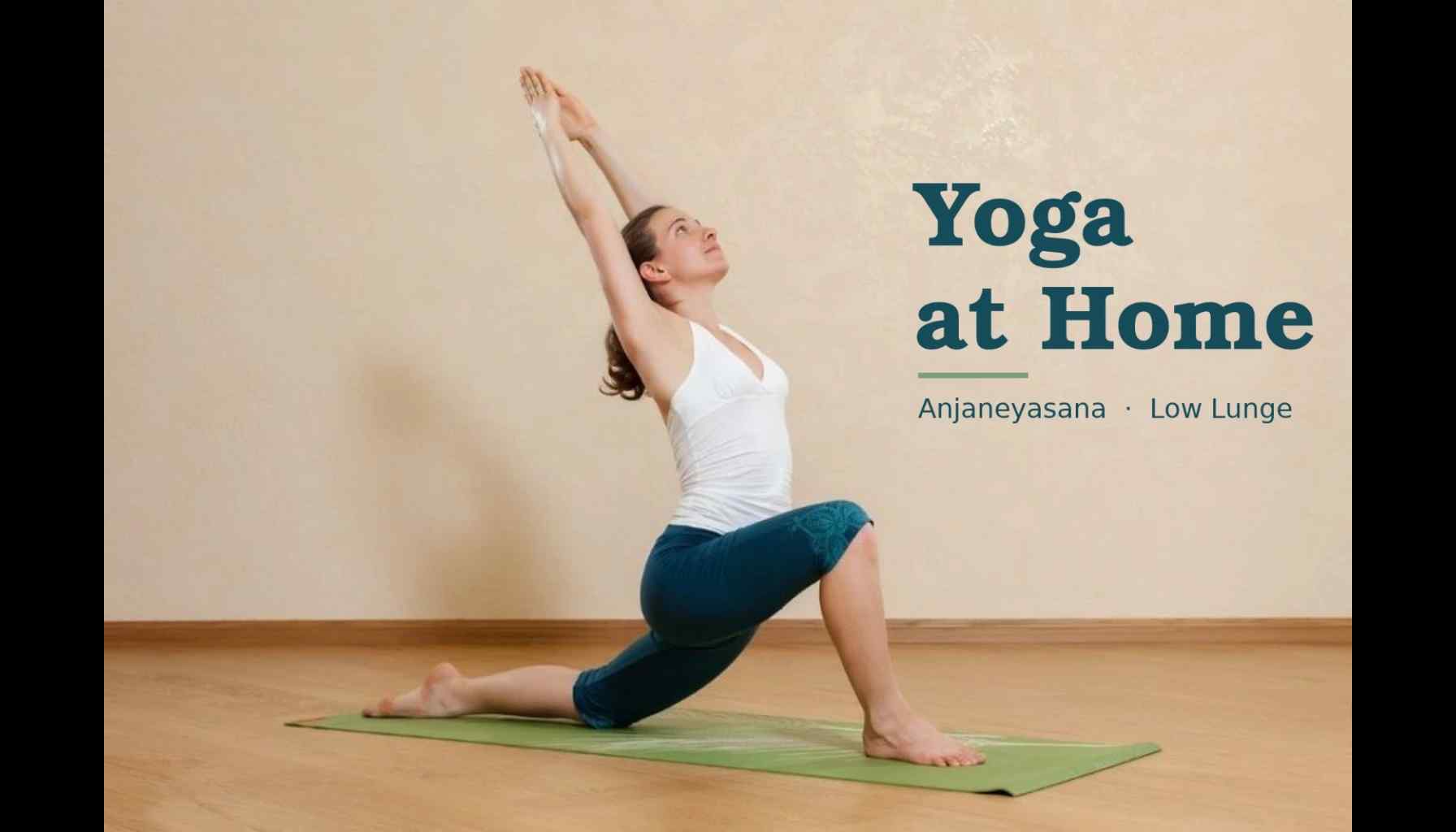
4. Low Lunge (Anjaneyasana): Bring one foot ahead between your hands and drop your back knee to stretch the hips. Do the same with the other side.
5. Mountain to Forward Bend (Tadasana to Uttanasana): Stand straight and fold from your hips as you let your head hang heavily.
6. Warrior II (Virabhadrasana II): Spread your arms outwards, bend your front leg and look beyond your hand on the ground. Do the same on the other side.
7. Bridge Pose (Setu Bandhasana): Lie on your back and raise your hips up using your feet.
8. Supine Twist (Supta Matsyendrasana): Drop your knees to one side to release your lower back, then switch sides.
9. Corpse Pose (Savasana): Lie flat, close your eyes, and let your whole body feel heavy.
Build a Routine You'll Actually Keep
The best routine is the one that you repeat. The following habits make this easy:
- Start small. Ten minutes every day is more likely than an hour once a month.
- Tie it to something else. Tie your practice session to another habit, like right after you brush your teeth or right before dinner time.
- Pick poses that you love. Start with a few poses that feel good to you, then add others gradually.
- Make sure you cover all areas. Make sure that your practice includes a forward fold, a back bend, a twist, and a side stretch.
- Make sure it fits your state of mind. Pick relaxing poses when tired, and flowing poses when energetic.
Safety Tips and Common Mistakes
Although yoga is a relatively soft activity, there are a few guidelines that will ensure safety when doing yoga at home.
- Start with warming up since cold muscles become strained, which means starting with some easy movements and breathing.
- No forced stretches. Light stretches are allowed, but any pinching feeling in your body is a signal that you should stop.
- Never hold your breath during practice. If your breathing becomes strained, then stop the pose.
- Avoid comparisons. The pictures of people performing advanced poses may create the wrong image and expectation of how you should perform a pose.
- It is better to have an empty stomach during the session, which means leaving about two hours after eating.
Consultation with a physician may be required if you are pregnant, recovering from an injury or have a chronic illness.
Final Thoughts
Yoga at home doesn't need fancy equipment or long sessions. Create a small, calm space, begin with a few simple poses, and show up regularly. With patience and curiosity, your practice will grow with you.
Frequently Asked Questions
1. Can beginners teach themselves yoga at home?
Yes, many beginners start this way. Choose simple poses, follow a reliable video or guide, move slowly, and stop if anything hurts.
2. Should we sleep after yoga?
Yes, you can sleep right after a gentle or restorative session, but after an energetic flow, give yourself a short cool-down so your body can settle.
3. Does yoga really change your body shape?
Yes, regular practice can tone muscles, improve posture, and build flexibility, though visible shape changes depend on consistency, intensity, and your overall diet and lifestyle.
4. What do I need to start yoga at home?
You can begin with just comfortable clothes and some floor space. A yoga mat adds grip and can make poses more accessible.
Also Read: Yoga for Beginners
By Umesh Kumar Khiri


Discussion (0)
No comments yet. Be the first to comment!
Leave a Comment
You need to login to post a comment.