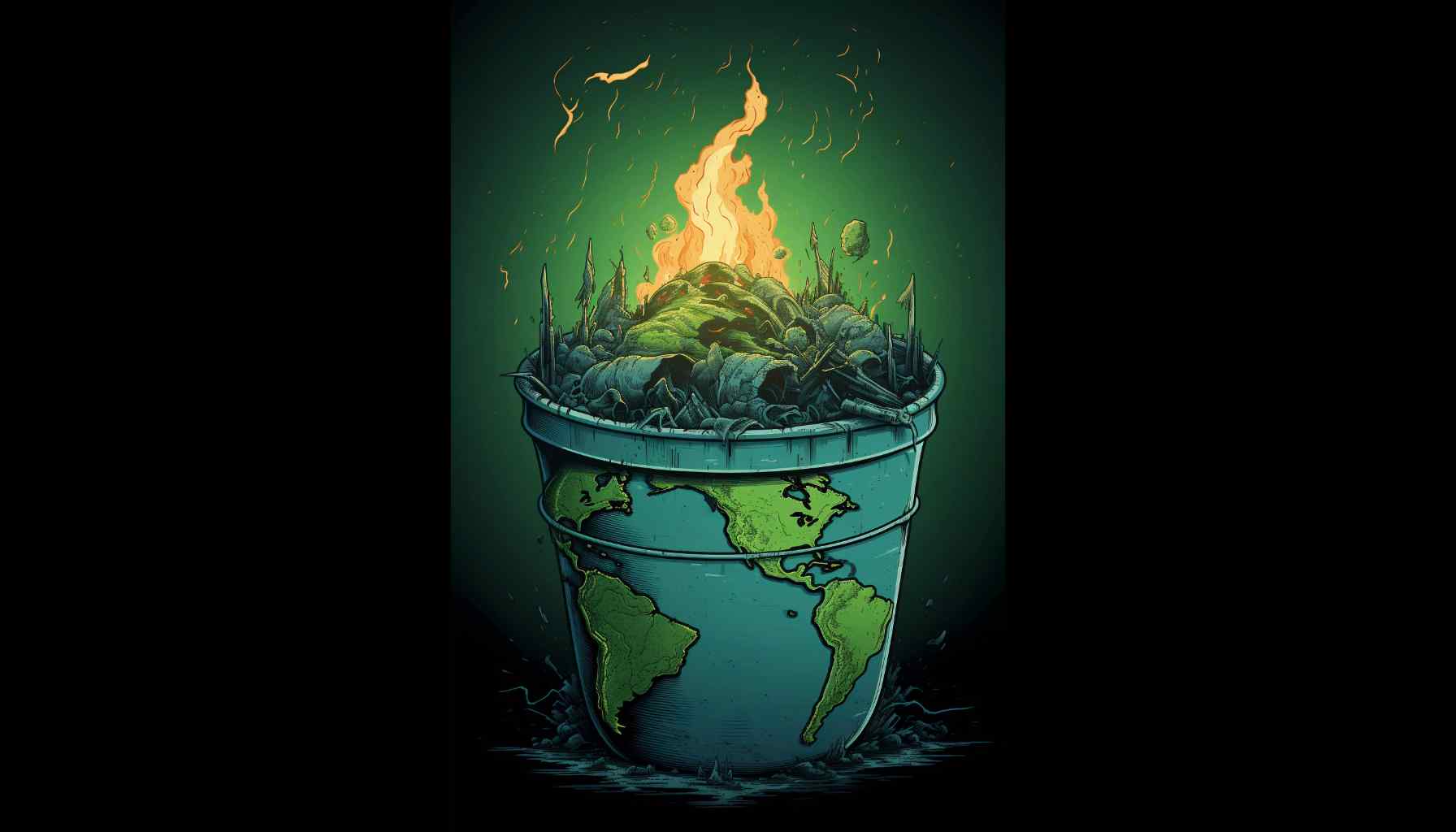
South Korea's fight against Food Waste
South Korea has become widely known for its ambitious efforts to reduce food waste and turn discarded food into useful resources. South Korea has responded with a combination of laws, technology, recycling systems and public participation. Its experience shows how government policy and everyday habits can work together to address a major environmental problem.
From Food Waste to a Resource
For many years, large quantities of food waste in South Korea were sent to landfills. This created problems such as unpleasant odours, pollution and the release of greenhouse gases. The government gradually introduced policies designed to reduce landfill disposal and encourage recycling.
A major change came with restrictions on sending food waste directly to landfills. South Korea also introduced a nationwide food-waste separation system. Households and businesses were encouraged to separate food scraps from ordinary household rubbish so that the organic material could be processed and reused.
Pay-As-You-Throw System
One of the country's important approaches is the pay-as-you-throw principle. Residents can be charged according to the amount of food waste they produce. In many areas, people use specially designed bags, while some communities use electronic systems that measure the quantity of waste deposited.
This system creates a direct connection between waste generation and cost. Families therefore have an incentive to buy only what they need, store food carefully and avoid throwing away edible food.
Smart Technology
Technology has also played an important role. In apartment complexes and other residential areas, electronic food-waste collection machines can identify users and measure the weight of food waste. Residents are then charged according to the amount they discard.
Such systems can encourage people to become more conscious of their consumption. Instead of treating food waste as something that disappears after it is thrown away, households can see it as a measurable resource and responsibility.
Recycling Food Waste
A significant part of the effort involves recycling it. After collection and processing, food waste can be converted into useful products such as animal feed, compost and biogas, depending on the material and treatment method.
The organic material can also contribute to renewable-energy production through anaerobic digestion. In this process, microorganisms break down organic matter and produce biogas, which can be used as an energy source.
The Role of Citizens
Government policies alone cannot solve food waste. South Korea's experience also demonstrates the importance of public participation. People have been encouraged to separate food scraps correctly, avoid unnecessary purchases and become more aware of the environmental cost of wasting food.
Restaurants, supermarkets, schools and other institutions can also contribute by improving food planning, controlling portions and finding ways to redistribute or reuse surplus food where appropriate.
Lessons for the World
South Korea's approach offers several lessons for other countries. Food-waste reduction can involve regulation, economic incentives, convenient collection systems, recycling infrastructure and public education. Technology can make waste measurable, while recycling can turn discarded organic material into valuable resources.
The goal is to prevent unnecessary waste in the first place and recover value from unavoidable food scraps.
South Korea's experience demonstrates that reducing food waste requires cooperation between governments, businesses and citizens. While no country can eliminate food waste completely, effective systems can significantly reduce it and create environmental and economic benefits. By treating food as a valuable resource rather than disposable material, societies can move towards a more sustainable and responsible food system.
By Jamuna Rangachari


Discussion (0)
No comments yet. Be the first to comment!
Leave a Comment
You need to login to post a comment.