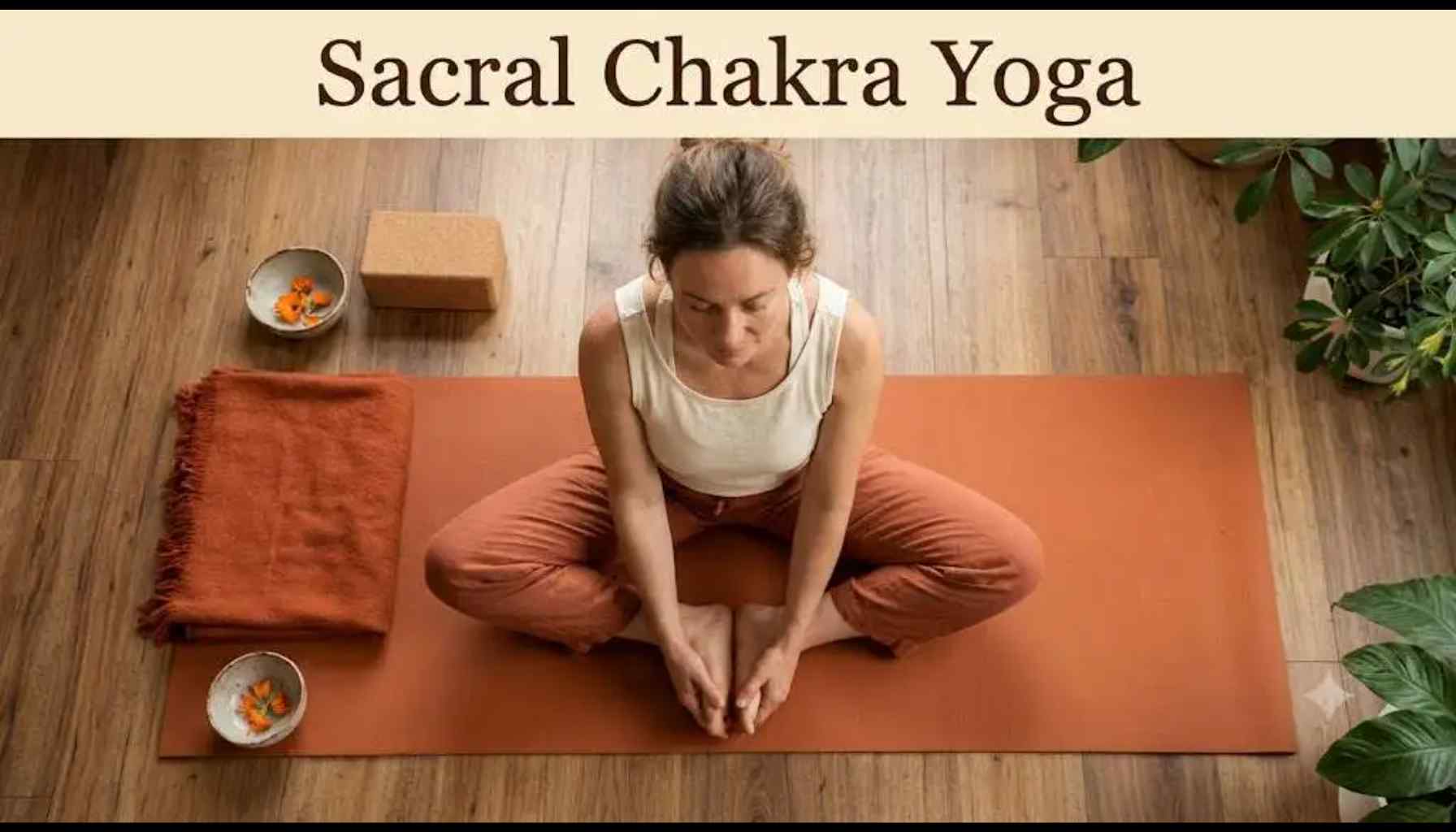
Sacral Chakra Yoga: Powerful Poses to Unlock Creative Flow
Some days you feel creative, curious and at ease in your own skin. On others, you feel flat, stuck or oddly swamped by emotion. Yoga tradition often ties these swings to the second energy centre in the body, and sacral chakra yoga is the practice designed to support it.
This guide explains what that energy centre is, how to tell when it feels out of balance, and which poses, breathing habits and daily rituals can help. You will also find safety notes and a short sequence you can follow at home.
Key Takeaways
- The sacral chakra, also called the Svadhisthana chakra, is the second of seven chakras, linked in yoga tradition with creativity, pleasure, emotion and flow.
- It sits in the lower belly, a couple of finger-widths below the navel, and is paired with the water element and the colour orange.
- The practice leans on hip-opening and pelvic-mobility poses such as butterfly, garland and goddess pose.
- Slow breathing, the VAM mantra, orange visualisation and creative play all support the practice off the mat.
- Chakras are a traditional framework, not a medical diagnosis, so lasting pelvic, urinary or reproductive symptoms need a doctor.
- Short, regular and pain-free sessions work better than forcing deep stretches.
What Is Sacral Chakra Yoga?
Sacral chakra yoga is a style of practice that uses postures, breath, sound and mindful attention to work with the second chakra. The goal is not to “fix” anything. It is to bring more ease, movement and feeling into the lower belly and hips, where this centre is said to live. You may also see it called Svadhisthana yoga or second chakra yoga.
The Sanskrit name, Svadhisthana, is usually translated as “one’s own abode” or “where you are established”. A related root word means “to taste with pleasure”, which hints at the chakra’s theme: enjoying life instead of merely getting through it.
Where the Sacral Chakra Sits and What It Represents
Traditionally, the Svadhisthana chakra is placed in the lower abdomen and inner pelvis, roughly two finger-widths below the navel. Many teachers suggest picturing it in the middle of the body, like a cone of energy opening towards the front and the back, rather than as a spot on the skin.
Its symbol is an orange lotus with six petals and a crescent moon shape at the centre. The imagery points to cycles, including the phases of the moon, and to the link between rhythm and creativity.
The element here is water, so the themes are flow, flexibility and emotional expression. Creativity, pleasure, sensuality, personal boundaries and even your relationship with money are all said to belong to this centre.
This centre is also tied to the way we relate to other people. Tradition says that balance here shows up as warm closeness paired with clear boundaries, while imbalance can look like leaning heavily on others or pulling away from them.
Some traditions also connect it with the reproductive organs, bladder, kidneys, adrenal glands and lower back.
In the wider system, it is the second chakra. The root chakra sits below it and deals with stability and security. The solar plexus chakra comes next and relates to confidence and personal power.
Here is how the second chakra fits among all seven:
|
No. |
Chakra |
Where it sits |
|
1 |
Root (Muladhara) |
Base of the spine |
|
2 |
Sacral (Svadhisthana) |
Lower belly and pelvis |
|
3 |
Solar plexus (Manipura) |
Above the navel |
|
4 |
Heart (Anahata) |
Centre of the chest |
|
5 |
Throat (Vishuddhi) |
Neck |
|
6 |
Third eye (Ajna) |
Between the eyebrows |
|
7 |
Crown (Sahasrara) |
Top of the head |
A Quick Reality Check on Chakras
Before going further, it helps to be clear about what this is. Chakras come from Indian spiritual tradition. They work as a map for attention and self-reflection, not as organs a scan can find. Studies of yoga tend to look at outcomes such as stress and pain rather than at chakras themselves.
Health authorities look at yoga as a practice that combines postures, breathing and meditation. The National Center for Complementary and Integrative Health, part of the US National Institutes of Health, describes yoga as generally safe for healthy people when practised appropriately, while reminding readers that you can still get hurt, as with any physical activity.
So treat yoga for the sacral chakra as a support, not a substitute for care. If you have ongoing pelvic pain, urinary trouble, or menstrual or reproductive concerns, see a doctor first.
Signs Your Sacral Energy May Feel Out of Balance
Teachers describe imbalance in this centre in emotional, mental and physical terms. Use the list below as prompts for reflection, not as a diagnosis.
- Feeling bored, flat or creatively stuck.
- Struggling to express emotions, needs or desires clearly.
- Feeling swamped by emotion, or leaning heavily on other people.
- Guilt or discomfort around pleasure, play or intimacy.
- Swinging between overindulgence and no interest at all in physical closeness.
- Rigid thinking, and trouble adapting when plans change.
- A tight, gripping feeling in the lower back and hips.
- A tense relationship with money.
Stress is usually the trigger. Tension in the body, mind or emotions can leave this centre sluggish or overactive, which is why a practice that calms the nervous system matters as much as any single pose.
When the centre feels balanced, tradition says the opposite shows up. Ideas flow, emotions move without drowning you, boundaries feel clear, and pleasure feels natural instead of guilty.
Overactive or Underactive? Matching Your Practice
Some teachers go a step further and describe this centre as either sluggish (underactive) or overdriven (overactive). It is a loose idea, not a clinical one, but it can help you decide how to practise.
An underactive centre is said to feel like boredom, numbness, stiffness and a missing creative spark. Flowing movement helps here, such as hip circles, gentle sequences that keep you moving, dance and playful creative experiments.
An overactive centre is said to feel like emotional overwhelm, restlessness, clinginess or obsessive thoughts about pleasure. Slower, grounding shapes suit this state, including forward folds, child’s pose, pigeon pose and long, quiet exhales.
Many people drift between the two, so there is no need to label yourself. Notice how you feel today and choose the practice that meets you there.
Sacral Chakra Yoga Poses at a Glance
Use this quick table to pick a shape that matches your energy and experience, then read the full steps below.
|
Pose |
Main benefit |
Level |
|
Butterfly |
Opens the inner thighs and hips |
Beginner |
|
Happy baby |
Eases the lower back and groin |
Beginner |
|
Bridge |
Mobilises the pelvis and lower back |
Beginner |
|
Garland |
Opens the hips and pelvic floor |
Steady |
|
Goddess |
Builds hip strength and steadiness |
Steady |
|
Reverse warrior |
Lengthens the side body and inner thighs |
Steady |
|
Pigeon |
Gives a deep stretch to the outer hips |
Active |
The Best Sacral Chakra Yoga Poses
The poses below open the hips, free the pelvis and soften the lower back. These sacral chakra poses suit most beginners, and each one has a gentler option.
Butterfly Pose (Baddha Konasana)
Sit tall with the soles of your feet together and let the knees fall open. Hold your feet and fold forward slightly from the hips. If your knees float high, sit on a folded blanket.
Garland Pose (Malasana)
Squat with your feet wider than your hips and toes turned out. Press your palms together at the chest and use the elbows to nudge the knees apart. Place a block under your hips if the squat feels heavy.
Goddess Pose (Utkata Konasana)
Take a wide stance with the toes turned out, then bend the knees over the ankles. Raise your arms in a cactus shape and keep the knees tracking over the toes. Stay for five slow breaths.
Happy Baby (Ananda Balasana)
Lie on your back, draw the knees towards the armpits and hold your feet or shins. Rock gently from side to side. It is a playful pose that fits the sacral theme of enjoyment.
Reclined Bound Angle Pose
Lie on your back with the soles of the feet together and let the knees drop open. Support each knee with a pillow or block so the hips can soften without strain. This is a restful alternative to butterfly pose.
Wide-Angle Seated Forward Bend (Upavista Konasana)
Sit with the legs spread wide and fold forward from the hips with a long spine. For a softer version, sit with your hips against a wall and rest the legs up the wall.
Frog Pose
From hands and knees, slide the knees wide with the ankles in line behind them. Lower onto the forearms and sink the hips back. Pad the knees with a blanket, and ease out if you feel any pinching.
Child’s Pose
Kneel with the knees wide and the big toes touching, then sit back and rest your forehead on the floor. It is a calm, grounding shape for days when emotions feel loud.
Pigeon Pose
This is a deep hip opener, so go slowly. Slide a cushion under the hip of the bent leg. If your knee complains, switch to a reclined figure-four stretch on your back.
Camel Pose (Ustrasana)
Kneel with the hips over the knees, place your hands on your lower back and lift the chest. Keep it small if your neck or back feels tight. It opens the front of the pelvis.
Twisted Lunge
From a low lunge, bring your palms together and hook the opposite elbow outside the front knee. Turn the chest open. Keep the back knee on the floor for a gentler version. The twist adds a wringing, flowing quality to the belly.
Reverse Warrior (Viparita Virabhadrasana)
Step into a wide lunge with the front knee stacked over the ankle. Turn the front palm to face up, sweep that arm overhead and tip back gently, letting the back hand rest on the rear leg. The shape lengthens the side of the body and stretches the inner thighs. Shorten your stance if the front knee feels strained.
Bridge Pose (Setu Bandha Sarvangasana)
Lie on your back with the knees bent and the feet about hip-width apart. Press down through the feet to raise the hips slowly, then lower the spine back down one vertebra at a time. Repeat five times, matching each lift and lowering to your breath. The movement wakes up the pelvis and eases the lower back.
Reclined Twist
Lie on your back with the knees bent and the arms spread wide like a T. Let both knees drop to one side and turn your gaze the opposite way. Stay for five to ten breaths, then switch sides. A pillow between the knees makes the twist more comfortable.
Pelvic Tilts and Hip Circles
On hands and knees, arch and round the lower back in a slow rhythm. Or sit cross-legged and draw large, smooth circles with the pelvis. These simple moves warm up the area before deeper poses.
Choosing Poses by Level and Mood
- Gentle and restorative: reclined bound angle, child’s pose, happy baby, bridge pose, reclined twist and pelvic tilts. Hold the supported shapes for two to five minutes and let the breath do the work.
- Steady: butterfly, garland, goddess, reverse warrior, frog and wide-angle seated forward bend.
- Active: pigeon, twisted lunge and camel pose, once your hips feel warm and open.
- Yin-style: for a slower, quieter practice, stay in butterfly, frog or reclined bound angle for three to five minutes with props beneath you. These long, supported holds suit days when your feelings seem loud.
A Simple Sacral Chakra Yoga Sequence
Here is a gentle routine of about 15 to 20 minutes that strings together the best sacral chakra poses. Move slowly and breathe through your nose.
- Sit comfortably for two minutes of slow belly breathing, picturing a warm orange glow below the navel.
- Do pelvic tilts or hip circles for one minute.
- Hold butterfly pose for one to two minutes.
- Fold forward in wide-angle seated forward bend for one to two minutes.
- Stay in goddess pose for five slow breaths.
- Hold garland pose for five to ten breaths.
- Rock in happy baby for one minute.
- Try pigeon or the reclined figure-four for one minute on each side.
- Rest on your back for three minutes with your hands on your lower belly.
Short, regular sessions beat occasional long ones. Aim for a few times a week and notice how you feel afterwards, rather than chasing a perfect shape. This is where sacral chakra yoga rewards patience.
Yoga for the Sacral Chakra Beyond the Mat: Breath, Sound and Creative Play
Postures are only one part of yoga for the sacral chakra. Slow breathing comes first. As you inhale, imagine water rising gently through the pelvis, and let the exhale soften the hips.
Sound is another tool. VAM is the seed sound traditionally tied to this chakra. Chant it the way you would chant OM, but draw it out more steadily, and feel the vibration low in the belly.
You can also try Shakti mudra. Hold your hands in front of the chest, press the little fingertips together and the ring fingertips together, then tuck the thumbs inside the palms and wrap the index and middle fingers around them.
Orange visualisation and short affirmations give the mind something to rest on. Try “I go with the flow”, “I allow myself to feel” or “I welcome joy and pleasure”.
Creative play matters just as much. Draw, dance in your kitchen, cook something new, take photos on a walk or write a few lines in a journal. Slow down and enjoy your senses too. Taste the coffee, notice the fabric on your skin, listen to music properly.
Because the element is water, drink plenty of it, and spend time near a river, lake or sea if you can. Some people also add a warm bath or orange stones such as carnelian. Treat these as comfort rituals rather than proven remedies.
Some practitioners also pair the practice with the scent of sweet orange or ylang-ylang oil, or with orange-coloured foods such as oranges and carrots. These are traditional comfort rituals, not proven treatments. Dilute any essential oil and patch-test it first.
Meditation counts as yoga for the sacral chakra as well. Even five quiet minutes with your hand on your lower belly can help you notice what you feel.
Practice Tips for Steadier Results
- Warm up first with a short walk or pelvic circles, because cold hips resist deep stretches.
- Keep the pace slow and the breath smooth, without chasing a performance.
- Think of this work as releasing control, not forcing the body open.
- Jot down a line or two in a journal afterwards about how you feel.
- Repeat a short routine often, instead of attempting a long one rarely.
Safety Tips Before You Start Sacral Chakra Yoga
- Stretch to a comfortable edge, never into sharp pain.
- Use props such as blocks, bolsters and folded blankets.
- If you have knee or hip problems, skip pigeon and deep squats or ask a teacher for a modified version.
- If you are pregnant, check with your health care provider first, because NCCIH advises that some poses may need changes, such as avoiding long periods lying on your back.
- Tell your teacher about any medical condition.
- Stay cool and hydrated, and take extra care if you try hot yoga.
- Hip work can sometimes stir up unexpected feelings. Slow your breathing, ease out of the pose, and think about speaking with a counsellor if the emotions feel heavy or keep returning.
Yoga should never delay care for pain or any other symptom. When in doubt, ask your doctor.
Frequently Asked Questions
What is sacral chakra yoga?
Sacral chakra yoga is a practice that combines hip-opening poses, breathing, mantra and mindful attention to support the second chakra, known as the Svadhisthana chakra. People use it to explore creativity, emotional flow and a healthy relationship with pleasure.
Where is the sacral chakra located?
Tradition places it in the lower belly, a couple of finger-widths below the navel, within the inner pelvis. Many teachers suggest imagining it at the centre of the body instead of on the surface.
What are the best yoga poses for the sacral chakra?
Butterfly pose, garland pose, goddess pose, happy baby, wide-angle seated forward bend and pigeon pose are popular sacral chakra poses. Pelvic tilts and hip circles are good warm-ups.
How do I know if my sacral chakra is blocked?
Chakras cannot be measured, so there is no test. Traditional signs include creative blocks, trouble expressing emotions, guilt around pleasure and tight hips. Use them as reflection prompts, and see a doctor for physical symptoms.
Is sacral chakra yoga safe for beginners?
Generally yes, when done gently with props and without pain. Check with a health care provider first if you are pregnant or have a medical condition, and let your teacher know.
How long should a sacral chakra yoga session last?
Fifteen to twenty minutes, a few times a week, is plenty for most people. Ease off or stop if anything hurts.
Can men practise sacral chakra yoga?
Yes. The poses are simply hip and pelvic mobility work, so they suit any body and any gender.
Should I start with the root chakra first?
Many teachers begin with grounding root chakra shapes and then move up to the hips. That order comes from tradition and is not a strict rule, so follow what feels right to you.
Bottom Line
Sacral chakra yoga brings together hip-opening poses, steady breathing, simple sound and a little creative play. Whether you see the chakras as literal energy or as a useful metaphor, the practice encourages movement, softness and self-awareness in a part of the body many of us hold tight.
Start gently, keep sessions short and let comfort guide you. If anything physical worries you, talk to a health professional. Then step back onto your mat and let sacral chakra yoga help you move through life with more flow.
Discussion (0)
No comments yet. Be the first to comment!
Leave a Comment
You need to login to post a comment.