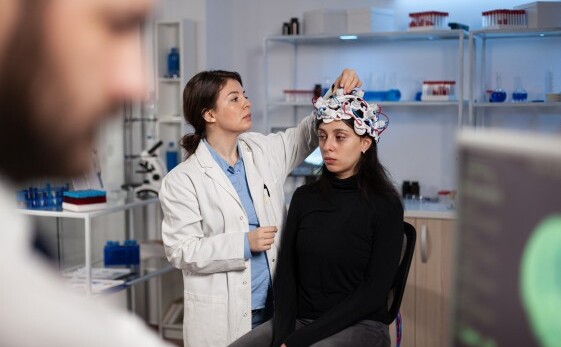
Optogenetic Therapy: A Promising Approach to Treating Diseases Through Light
Scientists are exploring this innovative approach to treat conditions affecting the nervous system, eyesight and other organs. It offers exciting possibilities for treating diseases with greater precision and fewer unwanted effects.
What Is Optogenetic Therapy?
Optogenetics is a technique in which light-sensitive proteins are introduced into selected cells. These proteins respond to particular wavelengths of light and can activate or inhibit cellular activity.
The technique was initially developed as a research tool to understand how brain cells communicate. Scientists discovered that they could use light to control individual neurons and study their functions.
Today, researchers are investigating how this technology could be adapted for medical treatment, particularly in people with neurological disorders and certain forms of blindness.
How Does Optogenetic Therapy Work?
The treatment generally involves three important stages.
Introducing light-sensitive proteins
Scientists use specially designed genetic material, often delivered through a modified, non-disease-causing viral vector, to help selected cells produce light-sensitive proteins called opsins.
Activating the proteins with light
Once the proteins are present, light of a specific wavelength can activate them. Depending on the protein used, this can stimulate or suppress the activity of the targeted cells.
Controlling cellular activity
Specialised light sources, including tiny optical devices or external light-stimulating equipment, can deliver the required light. This allows researchers to influence cellular activity with considerable precision.
Applications of Optogenetic Therapy
Restoring Vision in Blind People
One of the most promising applications is the treatment of inherited retinal diseases, particularly retinitis pigmentosa. This condition damages light-sensitive photoreceptor cells in the retina and can eventually cause blindness.
A significant development was reported in October 2026 in the New England Journal of Medicine. In a study involving 10 people with advanced retinitis pigmentosa, seven experienced increased light sensitivity after treatment. Six achieved a clinically meaningful improvement. The participants also used specialised light-stimulating goggles.
Neurological Disorders
Researchers are investigating optogenetics to understand and potentially influence brain activity associated with:
Parkinson's disease
Epilepsy
Alzheimer's disease
Huntington's disease
Stroke-related neurological damage
By controlling selected neurons, scientists can investigate abnormal brain circuits and identify potential treatment strategies. However, most applications remain experimental rather than established clinical treatments.
PubMed Central (PMC)
+1
Potential Applications in Cancer
Scientists are also investigating whether light-controlled biological systems could help regulate cellular processes involved in tumour growth.
Such approaches may eventually contribute to more targeted cancer research. However, optogenetic cancer treatment remains largely at the laboratory and preclinical research stage. It is not an established cancer therapy.
Benefits of Optogenetic Therapy
Some potential advantages include:
Greater precision in targeting specific cells.
Ability to activate or inhibit selected cellular activities.
Reduced interference with neighbouring cells.
Opportunities to study complicated neurological conditions.
Possibilities for developing new treatments for previously difficult-to-treat diseases.
Challenges and Limitations
Despite its promise, optogenetic therapy faces several challenges. Delivering genetic material safely to the correct cells is difficult. Researchers must also determine the appropriate light intensity, wavelength and duration.
Other concerns include immune reactions, long-term safety, the durability of treatment and the need for specialised equipment. More extensive clinical trials are required before many applications become widely available.
Conclusion
Optogenetic therapy represents an exciting intersection of genetics, neuroscience and medical technology. Its early clinical progress in restoring aspects of vision offers hope to people affected by certain forms of blindness.
Although its applications in neurological diseases and cancer are still being investigated, the technology could transform how scientists understand and treat complex conditions. Continued research, careful clinical testing and long-term safety monitoring will determine its future role in medicine.
The important distinction is that optogenetics is a promising research and therapeutic technology, not yet a universal treatment for blindness, neurological disorders or cancer.
We wish them all the best.
By Jamuna Rangachari



Discussion (0)
No comments yet. Be the first to comment!
Leave a Comment
You need to login to post a comment.