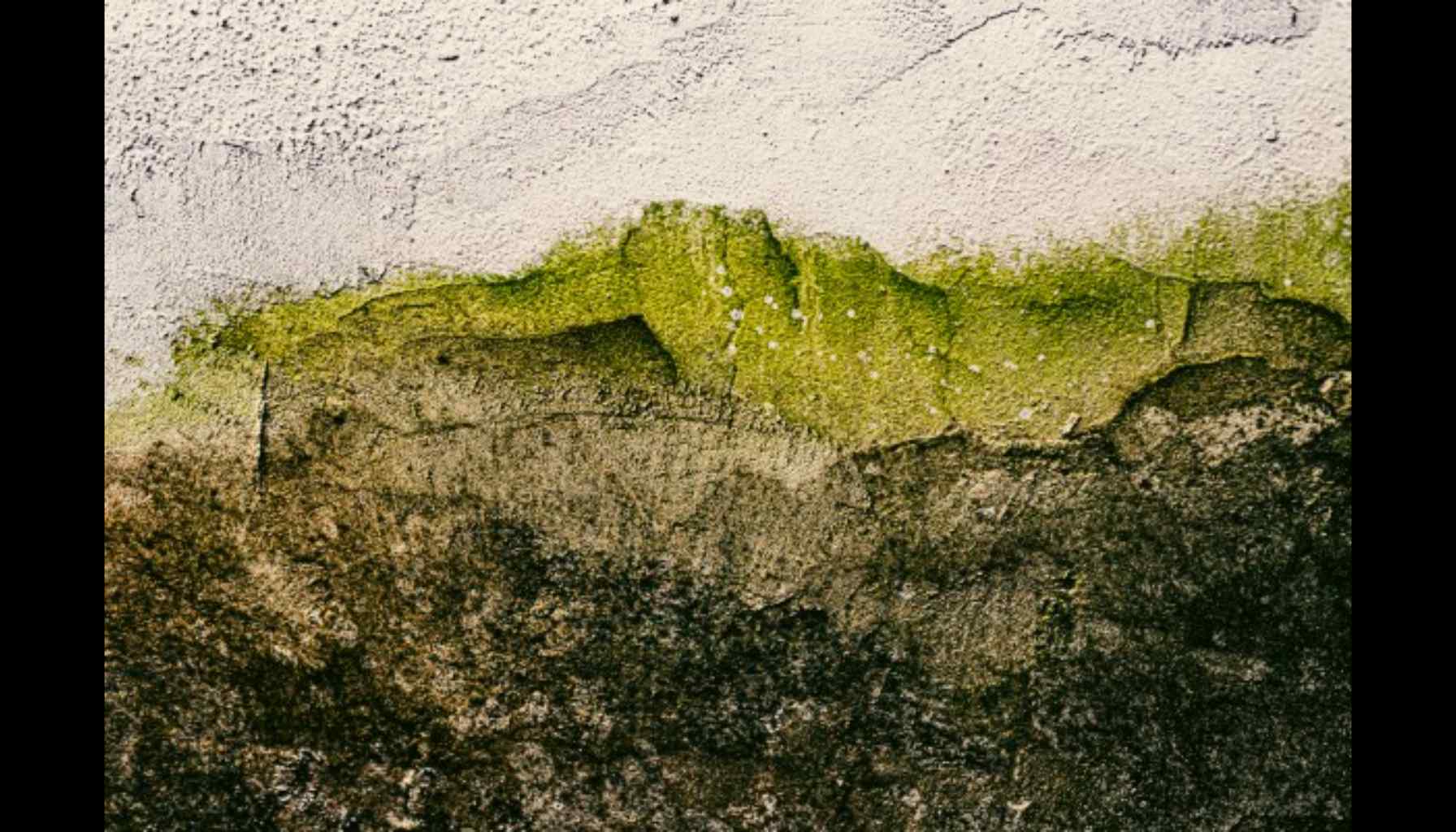
A Dutch startup is transforming ordinary grey buildings into living green surfaces
Respeyre, the start up's innovative technology, known as Mosscrete, allows moss to grow directly on concrete walls, offering a promising approach to making cities greener and potentially cooler. The startup grew out of research at Delft University of Technology in the Netherlands.
How does the technology work?
Traditional concrete is designed to be strong and durable, but it does not naturally provide ideal conditions for moss to flourish. Respyre has developed a special coating made with recycled concrete that encourages moss to establish itself on building surfaces.
The material has a porous texture that retains moisture and creates suitable conditions for moss growth. Moss can attach itself using tiny structures called rhizoids, which differ from the penetrating roots of many other plants.
The coating can be applied to existing walls or incorporated into new buildings. Once the moss becomes established, it may survive largely on natural moisture from rain and the surrounding air, depending on local conditions. This reduces the need for the soil, planting containers and irrigation systems commonly associated with conventional green walls.
Why is moss-covered concrete useful?
1. Helping cities manage heat
Cities often become hotter than surrounding rural areas because roads, roofs and buildings absorb and retain heat. Moss retains moisture, and evaporation can help cool surfaces. However, its cooling effect depends on how wet the moss remains and how much sunlight it receives.
2. Supporting cleaner air
Moss can trap airborne particles on its surface. Covering suitable building facades with moss could therefore contribute to urban air-quality efforts, although the overall impact depends on the area covered and local pollution levels.
3. Encouraging biodiversity
Moss-covered walls can create small habitats for microorganisms and some tiny invertebrates. This helps introduce elements of nature into neighbourhoods where space for parks and gardens is limited.
4. Making use of recycled materials
Respyre's approach uses recycled concrete in its moss-supporting material. Instead of treating suitable concrete waste simply as a disposal problem, the startup gives it a new purpose in urban construction.
Where is the technology being tested?
According to an October 2026 report, Respyre's technology has been used in eight projects across Belgium and the Netherlands. These have been used in warehouse facade, a noise barrier and social housing. Other applications include commercial building renovations and bridge structures. The projects help researchers understand how moss performs under different environmental conditions.
Challenges and the road ahead
The technology still faces practical challenges. Moss needs suitable moisture, light and temperatures to thrive. Growth may be slow or uneven in dry, hot or exposed locations. Research at Delft University of Technology has also investigated how to establish moss more reliably on concrete and improve its survival outdoors.
It is also important to measure the long-term durability, maintenance requirements and environmental benefits of these living facades before assuming they will work equally well in every climate.
A greener vision for cities
Respyre offers a fresh way to think about urban construction. Rather than treating nature as something that must be added to buildings through expensive gardens, it develops a material that allows nature to grow on the buildings themselves.
If the approach proves effective at a larger scale, unused walls, barriers and other concrete surfaces could become greener, more nature-friendly parts of the urban landscape.
The central idea is simple but inspiring: instead of building cities that merely resist nature, we can design them to make room for it.
We wish them all the best.
By Jamuna Rangachari

Discussion (0)
No comments yet. Be the first to comment!
Leave a Comment
You need to login to post a comment.