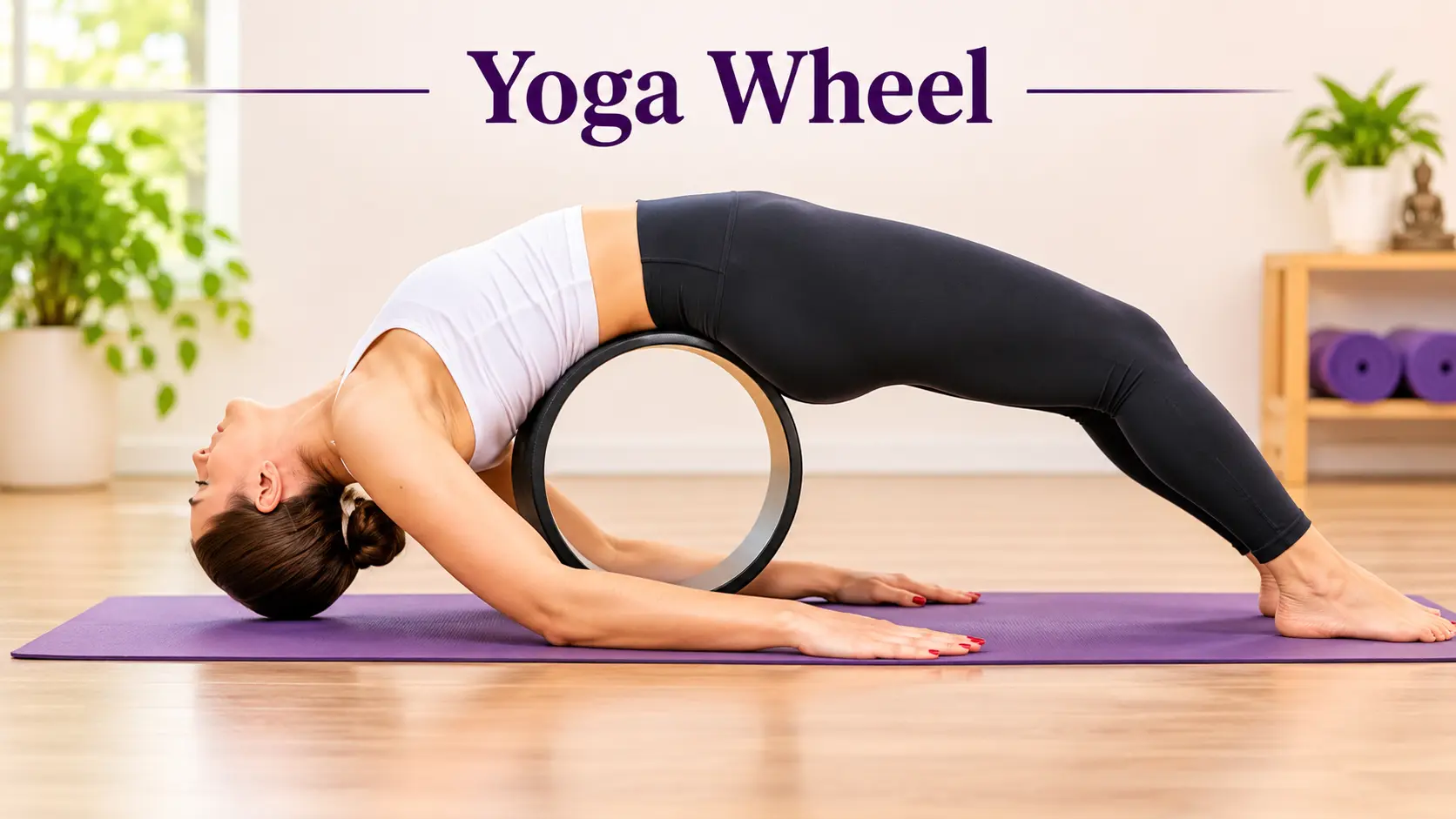
Yoga Wheel: Use Safely
A yoga wheel is a ring-shaped prop that supports your spine, opens your chest and adds a new challenge to familiar poses. It can feel like a gentle back massage one minute and a core workout the next. Because it rolls, it also asks for care, especially if you're new to it. This guide explains how the wheel works, what to look for when buying one and how to use it step by step.
Key Takeaways
- Support with a roll: The curved shape cradles your spine and helps you ease into backbends and chest openers.
- Choose by size, material and grip: The right wheel depends on your body, your practice and your comfort.
- Go slowly: A rolling prop calls for a non-slip surface, a warm-up and a gentle pace.
What Is a Yoga Wheel and How Does It Work?
A yoga wheel is a lightweight, circular prop, usually hollow in the middle and wide enough for your back to rest across. Most are made of strong plastic or wood, often with a layer of padding or a grippy surface. Its curve fits the natural arch of your spine, so you can lie over it to open your chest, roll gently along your back or use it as support in balance and strength work.
The wheel works in three ways. It supports your back so you can stay in a backbend without effort. It lets you roll slowly to release tension in tight muscles. And, because it moves, it asks your core and stabilizing muscles to work, which builds control and balance.
Types and Sizes of Yoga Wheels
Standard wheels are the most common, about 12 inches (30 cm) across, and suit most back, chest and spine work.
Mini wheels are smaller, around 6 inches, and are good for targeted areas such as the upper back, neck base and shoulders, or for people with a smaller frame.
Wheel sets combine different sizes so you can switch depending on the pose or area you want to work.
Consider your height, flexibility and goals. A larger wheel gives broad support for lying back, while a smaller one gives a more focused release.
What to Look for When Buying
- Material: Strong plastic is light and durable, while wood feels firmer and more natural. Check that the surface is smooth and free of cracks.
- Padding: A cushioned surface makes backbends and rolling more comfortable on the spine.
- Grip: A textured or tacky surface helps the wheel stay steady on your mat.
- Weight capacity: Many wheels are rated to hold several hundred pounds, but ratings differ, so check the label for the model you choose.
- Width and shape: A broad wheel feels more stable for beginners.
- Build quality: Inspect for secure joins and an even circle that rolls smoothly.
Benefits of Using a Yoga Wheel
- Chest and shoulder opening: Lying over the curve helps counter hunched posture from desk work.
- Spine support: It cradles your back, so you can ease into gentle backbends.
- Back release: Slow rolling can relieve tension in tight muscles.
- Core strength: Balancing on or over the wheel challenges your stabilizers.
- Greater variety: It adds new options to a routine that feels repetitive.
- Confidence: It helps you explore poses you might not reach on your own.
How to Use a Yoga Wheel in Common Poses
Place your wheel on a non-slip mat or floor, warm up first and move slowly.
1. Easy Pose (Sukhasana) Recline
- Sit with crossed legs, the wheel positioned behind you in line with your spine.
- Inhale to lengthen, then exhale and lean back slowly over the wheel.
- Rest your head and neck on or just beyond the wheel, and breathe for five breaths.
2. Child's Pose (Balasana)
- Come down to your knees with your knees spread wide apart, keeping the wheel in front of you.
- Rest your hands on the wheel and fold your torso forward.
- Roll the wheel slowly forward and back to stretch your shoulders and back.
3. Supported Bridge Pose (Setu Bandha Sarvangasana)
- Lie down with your knees bent and feet flat.
- Lift your hips and slide the wheel under your lower back or sacrum.
- Rest your weight on the wheel with your arms by your sides, and breathe slowly.
4. Supported Fish Pose (Matsyasana)
- Sit with your legs extended and the wheel behind your mid-back.
- Lean back so the wheel supports your upper back, with your head resting comfortably.
- Open your arms and breathe, stopping if your neck feels strained.
5. Reclined Bound Angle Pose (Supta Baddha Konasana)
- Sit with the soles of your feet together and the wheel behind your back.
- Lie back over the wheel and let your knees fall apart.
- Relax your arms and stay for several slow breaths.
6. Plank Pose (Phalakasana) on the Wheel
- Start in plank with your hands on the mat and your shins resting on the wheel.
- Draw your belly in and keep your body in one line.
- Hold for a few breaths, then lower your knees to release.
Safety Tips
- Use a non-slip mat and ensure that the wheel is not close to slippery surfaces.
- Warm up using gentle stretching movements before attempting any back bends.
- Perform movements slowly and ensure that your core is moderately engaged so as not to over-arch the lower back.
- Do not force yourself into any position, and stop when you experience any sharp pain, numbness, or pinching.
- Protect your head and neck and do not bend your neck backwards.
- Consult with a doctor prior to doing the yoga wheel if you suffer from any condition of the spine, osteoporosis, a recent injury, high blood pressure, or if you are pregnant.
How to Care for Your Yoga Wheel
Clean the wheel using a wet cloth and mild soap, and dry completely. Do not expose the wheel to sunlight and heat, as they will make it weak, and check periodically for cracks, broken padding, and worn spots. Replace it if it gets damaged.
FAQs
1. What is a yoga wheel used for?
It supports the spine in backbends, opens the chest and shoulders, releases back tension and challenges balance and core strength.
2. Can beginners use a yoga wheel?
Yes. Beginners can start with gentle supported poses and slow rolling, ideally with proper guidance. It is recommended to build up gradually.
3. Is a yoga wheel good for back pain?
Many people find gentle wheel work relaxing for muscle tension, but it isn't a treatment for medical conditions. Anyone with ongoing back pain should check with a doctor first and avoid forcing any pose.
4. Is a yoga wheel safe?
It can be safe when used slowly on a non-slip surface and adapted to your body. Maintain safety protocols while practising yoga.
Also Read: Yoga Chair


Discussion (0)
No comments yet. Be the first to comment!
Leave a Comment
You need to login to post a comment.