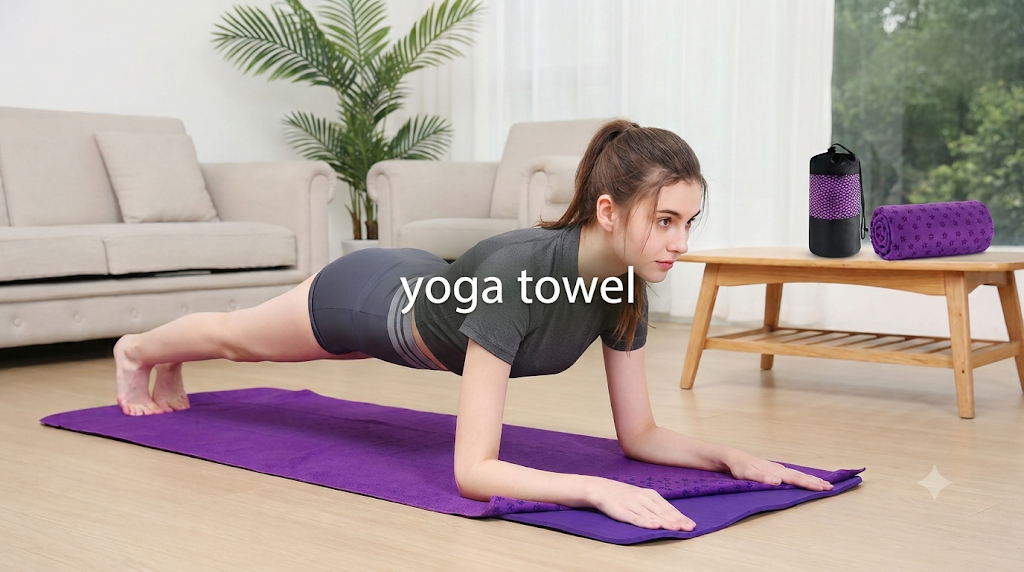
Yoga Towel: Use It for a Safer Practice
A yoga towel is a thin, absorbent cloth made to lie on top of your mat, soak up sweat and give your hands and feet something to grip. If you have ever slid forward in Downward-Facing Dog on a damp mat, you already know why it matters. A good towel keeps you steady, protects your mat and keeps your practice cleaner. This guide explains how it works, what to look for and how to get the best from it.
Key Takeaways
- Grip first: A yoga towel absorbs moisture so you slip less, especially in hot or sweaty classes.
- Match size and material: Choose a towel that covers your mat and dries quickly.
- Care keeps it working: Wash it often, skip fabric softener and let it dry fully.
What Is a Yoga Towel and How Does It Work?
A yoga towel is a long, thin towel designed for use during practice. Most are rectangular and sized to cover a standard mat, which is usually around 68 to 72 inches long. They are usually made from microfiber, often with a slightly textured or suede-like surface that grips better as it gets damp. Many also have silicone dots or a non-slip underside so the towel stays in place.
Most mats are made from closed-cell materials that don't absorb moisture, so sweat sits on top and makes them slippery. A yoga towel soaks up that moisture and spreads it out, which restores traction. It can also add a little softness under your hands and knees, and it forms a washable layer between your body and the mat.
Yoga Towel vs Regular Towel
A bath or beach towel looks similar but behaves very differently during practice.
|
|
|
|
|
|
|
|
|
|
|
|
|
|
|
|
|
|
|
|
|
|
|
|
A regular towel can work for a quick wipe of the face, but it tends to bunch and slide under you, which raises the chance of a slip.
When a Yoga Towel Helps Most
- Hot or heated classes: In warm rooms you sweat heavily, and a towel keeps your hands and feet from sliding.
- Naturally sweaty hands and feet: Even in cool studios, some people lose grip easily.
- Shared or studio mats: A personal towel adds a layer between you and a mat many others have used.
- Protecting your own mat: It takes most of the sweat and friction, so your mat stays fresher for longer.
- Travel and outdoors: It is light, packs small and doubles as a towel.
- Extra comfort: Folded or rolled, it can pad sensitive knees, wrists or the head in restful poses.
What to Look for When Buying
Material. Microfiber blends are the usual choice because they absorb well, dry quickly and resist odor. Cotton is soft but holds moisture and can feel heavy when soaked, so it suits gentle practice better than heated classes.
Size. Pick a towel at least as long and wide as your mat so it covers the whole surface. Smaller towels are useful if you only want grip under your hands and feet, or if you are using one over a travel mat.
Grip features. Look for silicone dots or a textured underside, and consider corner pockets that hook over the mat.
Thickness. A thin towel stays close to the mat and avoids bunching.
Quality. Check for firm stitching around the edges and dyes that don't run when washed.
How to Use a Yoga Towel
- Lay the towel flat over your mat and smooth out any wrinkles.
- Tuck or fold the top edge slightly around the mat so it doesn't creep.
- If the towel feels slippery at the start, lightly mist the areas under your hands and feet with water. Once you warm up, your own sweat takes over.
- Alternatively, fold the towel back at the top for your first few movements, and unfold it when you begin to sweat.
- Between poses, tidy any bunching before moving on.
Poses Where a Yoga Towel Helps Most
- Downward-Facing Dog (Adho Mukha Svanasana): Grip under your palms and feet keeps your hips lifting back instead of your hands sliding forward.
- Plank Pose (Phalakasana): A steady surface lets you hold alignment without your hands skidding.
- Four-Limbed Staff Pose (Chaturanga Dandasana): Traction helps you lower with control.
- Warrior II (Virabhadrasana II): A grippy back foot supports a firm, steady stance.
- Crow Pose (Bakasana): Dry, secure hands matter when you lift your feet.
How to Care for Your Yoga Towel
- Wash it after every sweaty session.
- Use a cool or low-temperature wash, and skip fabric softener, which reduces grip and absorbency.
- Air-dry it, since microfiber dries quickly and keeps its texture best that way. If you use a dryer, choose low heat.
Staying Safe in Heated Classes
If you practise in a hot room, drink water before and after class and rest whenever you feel dizzy or unwell. A towel improves grip but can't prevent overheating, so listen to your body.
Final Thoughts
It’s time to use a yoga towel to make your practice steadier, cleaner and more comfortable. It prevents you from slipping as it absorbs sweat and moisture. Choose one that fits your mat, dries quickly and grips well, then care for it properly so it keeps working.
FAQs
1. What is a yoga towel used for?
It absorbs sweat, adds grip on your mat, keeps the surface cleaner and can double as padding or a travel towel.
2. Do you need a yoga towel for hot yoga?
It is not mandatory, but many people find it very helpful for hot yoga. Often heavy sweating makes mats slippery, so using a yoga towel is recommended.
3. Can I use a yoga towel without a mat?
Yes, on soft surfaces such as grass, sand or a thick rug. On a hard floor, it is usually too thin and may slide, so use a mat as well.
4. How do you wash a yoga towel?
Towels are made of microfibre. Wash it in cool water without fabric softener and air-dry it, ideally after each use.
Also Read: Yoga Blocks
By Umesh Kumar Khiri



Discussion (0)
No comments yet. Be the first to comment!
Leave a Comment
You need to login to post a comment.