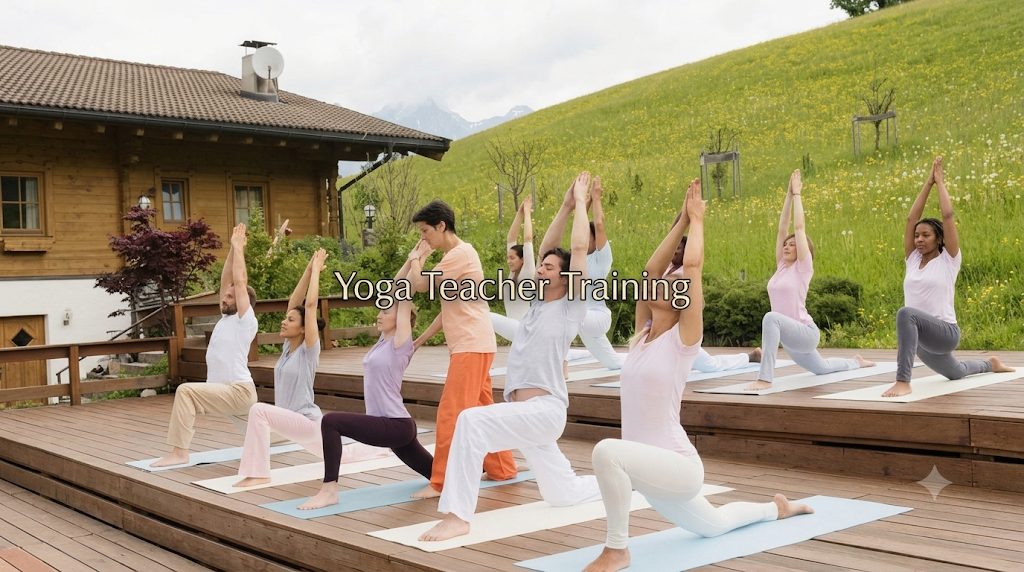
Yoga Teacher Training: Choose a Course
Yoga teacher training is often the next step for people who have fallen in love with their practice and want to understand it more deeply. Some enrol to teach, while others simply want to learn the philosophy, anatomy and discipline behind the poses. Courses vary widely in length, style, cost and credibility, so choosing well matters. This guide explains what training involves, how certification works and how to pick a programme that fits you.
Key Takeaways
- Decide whether you want to teach, deepen your own practice or both.
- Accreditation, syllabus and teacher experience matter more than a short, flashy course.
- Residential, online, hybrid and modular options suit different schedules.
What Is Yoga Teacher Training and What Does It Cover?
Yoga teacher training (YTT) is a structured course that prepares you to teach yoga and, in many cases, leads to a certificate. It usually combines practice, theory and supervised teaching. Programmes differ by school and tradition, but most include these areas:
|
|
|
|
|
|
|
|
|
|
|
|
|
|
|
|
|
|
|
|
|
|
|
|
Understanding Course Hours and Levels
Hours are the most common way to describe training. Internationally, Yoga Alliance recognizes 200-hour and 500-hour levels, usually reached by completing a 200-hour course first and a further 300 hours later. In India, the Ministry of AYUSH's Yoga Certification Board runs a certification system with levels such as Yoga Protocol Instructor and Yoga Wellness Instructor, assessed against defined syllabi.
Schools also offer specialist options, such as advanced programmes beyond 200 hours, children's yoga and prenatal yoga training, which suit teachers who want to serve specific groups.
Choosing a Format That Fits Your Life
Residential programs. You stay at the school or ashram for a few weeks and engage yourself in practices and studies daily. It is very engaging and without any distraction, but demands your time away from your job and family.
Online programs. You do your studies from home with the help of live classes and video lectures. This mode is convenient but demands self-motivation and a place where you can practice.
Hybrid program. It is the mixture of online and residential or physical class programs, combining both convenience and practicality.
Module or part-time programs. This type allows you to take the whole course in several parts.
There are many schools located in popular yoga destinations which provide very short courses, even up to one month. This kind of program can be effective if it provides good teaching and proper daily workload, but very short period does not allow you to assimilate the information.
How to Choose a Reputable Programme
- Check accreditation. Look for recognition from relevant bodies, such as the Yoga Certification Board in India or Yoga Alliance internationally, and confirm it directly with them.
- Look for practical teaching. You should have supervised practice and honest evaluation.
- Understand the assessment. A reputable course tests knowledge and teaching ability rather than handing out certificates automatically.
- Read reviews and talk to alumni. Graduates can tell you about the real workload and quality.
- Check the fine print. Review fees, refund policy, included meals or accommodation and prerequisites.
Well-Known Yoga Teacher Training Institutes in India
- Bhartiya Vidya Bhavan and Maharaja Agrasen College (Delhi University)
- Sri Sri School of Yoga, Bengaluru ashram (also Rishikesh and Dharamshala)
- The Yoga Institute, Santacruz (East), Mumbai
- Bihar School of Yoga, Munger
- Morarji Desai National Institute of Yoga (MDNIY), New Delhi
- Patanjali Yogpeeth, Haridwar
Who Can Join?
The requirements differ. There are those that ask for only the minimum age and the educational requirement. There are also those that will ask you to go through some form of training before being admitted.
What a Typical Day of Training Is Like
For immersive courses, the day starts early with breathing exercises and meditations, which is then followed by several hours of practice asanas, lunchtime, lecture on anatomy or philosophy, teach, and then relaxation at the end of the day. This is the same schedule but with more hours in part-time and online courses.
Preparing for Your Training
- Build a consistent practice for a few months beforehand.
- Learn basic anatomy terms and pose names to ease into lectures.
- Share health conditions or injuries with the organizers.
- Read a few foundational yoga texts, if you're curious, to start thinking about the philosophy.
What Comes After Certification
Graduates can teach classes at studios, gyms, schools, corporate settings, community centres or online. Others continue to deepen their practice or move into specialisations such as prenatal yoga, children's yoga or therapeutic approaches. Remember that finishing a course is the beginning of learning to teach, and confidence grows with regular practice teaching, mentorship and continued study.
Warning Signs to Watch For
Be cautious of programmes that promise guaranteed jobs, offer certificates with minimal attendance, have vague syllabi, hide their teachers' credentials or pressure you to pay quickly. A trustworthy school is transparent about content, assessment and costs.
Final Thoughts
Good yoga teacher training deepens your own practice while teaching you how to guide others safely and clearly. Take your time, compare programmes carefully and choose one whose teachers, syllabus and pace suit you. Done well, it can be a life-changing step, whether or not you ever teach a class.
FAQs
1. What is yoga teacher training?
It's a structured course that teaches you how to practise and teach yoga, covering poses, breathwork, philosophy, anatomy and teaching skills, often ending in certification.
2. How many hours of yoga teacher training do I need?
A 200-hour course is the most common starting point, and many people continue with 300 more hours for a 500-hour level. Requirements depend on where and what you want to teach.
3. Do I need to be advanced to join yoga teacher training?
No. You need a regular practice and a willingness to learn, but not advanced poses. Check each school's prerequisites.
4. Is yoga teacher training certification recognized in India?
Recognition depends on the school and the certifying body. India's government-backed system is run by the Yoga Certification Board, so it helps to confirm whether a course aligns with it.
Also Read: Yoga for Athletes
By Umesh Kumar Khiri


Discussion (0)
No comments yet. Be the first to comment!
Leave a Comment
You need to login to post a comment.