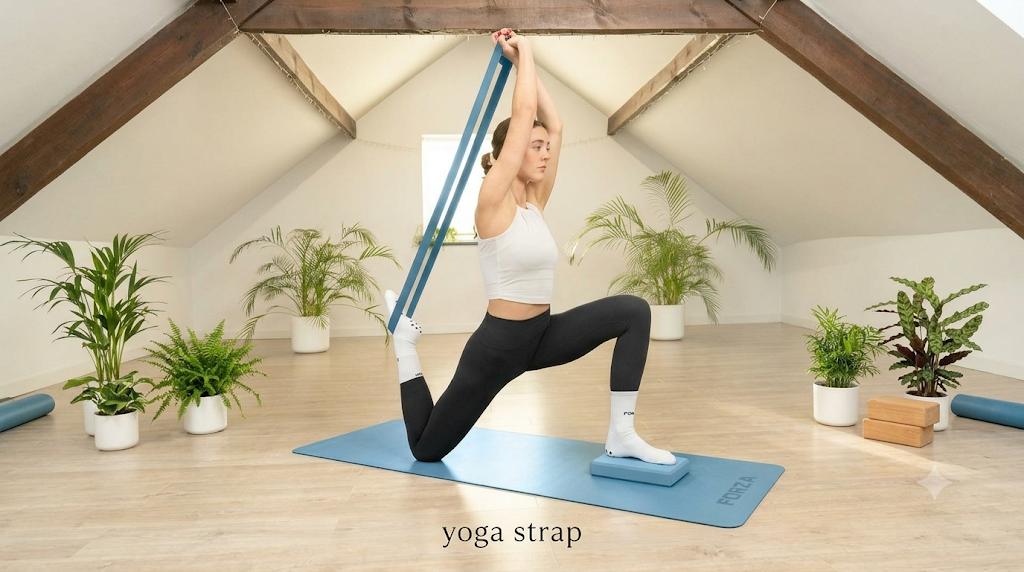
Yoga Strap: How to Choose One and Use It Well
A yoga strap is a simple band that can change how a pose feels. It extends your reach, steadies your alignment and lets you hold stretches long enough to benefit from them without forcing your body. Whether you're stiff in the hamstrings, tight in the shoulders or simply new to the mat, a strap helps you practise with more ease and less strain. Here's how to pick the right one and use it safely.
Key Takeaways
- A yoga strap lets you reach your feet or hands without rounding your back or straining.
- The right combination of yoga strap depends on your height, practice style and comfort.
- Use the strap to guide a stretch, never to yank yourself deeper.
What Is a Yoga Strap and Why Use One?
A yoga strap, which is sometimes referred to as a yoga belt, is a piece of fabric made up of strips. The strap can either be held as a single strip of fabric or used in a looped form that is adjusted to any size and fits a foot, thigh, waist or upper arm. Its three primary functions include: bridging the distance between the hands and feet such that you can have a long spine, setting a gentle limit to ensure that the knee or elbow does not stray from its proper position and finally holding the body in relaxing positions.
As a strap adjusts itself to your proficiency, it remains beneficial at every stage of practice.
How to Choose the Right Yoga Strap
Material. Cotton feels soft, grips well and absorbs sweat, making it a comfortable all-rounder. Nylon or polyester blends are lighter and strong, and they dry quickly, though they can feel slicker in the hand.
Length. A strap of about six feet suits most people for basic stretches. Taller practitioners, or anyone who wants room for deeper reaches and bigger loops, may prefer eight to ten feet. Check the strap against your height and the poses you practise most.
Width. A strap around an inch and a half wide is easy to grip and sits comfortably. Wider straps feel more supportive for restorative work, though they can feel bulky in small loops.
Buckle type. A D-ring buckle lets you create secure loops of different sizes and holds firmly under tension. A cinch buckle is quick to adjust and holds steady once tightened, though some people find D-rings more secure for heavier pulling. Choose the style you find easier to handle.
Quality. Look for firm stitching, a smooth buckle and fabric that doesn't fray. Replace a strap that is worn, thin or splitting.
How to Use a Yoga Strap in Common Poses
Have your strap within reach and pre-sized before you begin. Keep your breath steady, and ease off if you feel sharp pain.
1. Seated Forward Fold (Paschimottanasana)
- Sit with your legs straight and loop the strap around the soles of your feet.
- Hold the ends and lengthen your spine as you inhale.
- Fold forward from the hips, pulling gently on the strap without rounding your back.
2. Reclined Big Toe Pose (Supta Padangusthasana)
- Lie on your back and loop the strap around the ball of one foot.
- Lift that leg toward the ceiling, holding the strap in both hands.
- Keep the other leg grounded, then draw the strap gently closer for a deeper hamstring stretch.
3. Reclined Bound Angle Pose (Supta Baddha Konasana)
- Make a large loop and place it around your waist and under your feet in Bound Angle Pose.
- Tighten the strap nicely. Make sure your feet are held comfortably in place.
- Lie back slowly, perhaps with a bolster along your spine, and breathe for several minutes.
4. Standing Hand-to-Big-Toe Pose (Utthita Hasta Padangusthasana)
- Stand in Mountain Pose and loop the strap around the ball of one foot.
- Lift that leg forward and hold the strap in the same-side hand.
- Keep your spine upright and your standing leg firm, then switch sides.
5. Cow Face Arms (Gomukhasana arms)
- Hold the strap in one hand, raise that arm and let the strap drop behind your back.
- Reach the other hand up your spine to grasp the strap.
- Open your chest and walk your hands closer little by little, then switch sides.
6. Bridge Pose (Setu Bandhasana)
- Lie on your back with your knees bent and a hip-width loop around your thighs just above the knees.
- Press the feet down to lift your hips, using the strap to keep your knees from splaying.
- Hold for a few breaths, then lower slowly.
Benefits of Using a Yoga Strap
- Better alignment: It guides your spine, knees and elbows into supportive positions.
- Easier access: It makes demanding poses reachable while you build flexibility.
- Joint protection: It prevents limbs from splaying, which can stress joints.
- Deeper relaxation: It supports restful poses so you can release tension.
Tips for Safe, Comfortable Practice
- Pull gently and steadily instead of bouncing or yanking.
- Keep a small bend in your elbows when pulling, to avoid locking joints.
- Pre-size the loop before settling into a pose.
- Check buckles and stitching before each session.
- If you have an injury or health condition, ask a qualified teacher or doctor how to adapt poses.
How to Care for Your Yoga Strap
Wash cotton straps in cool water and air-dry them. Wipe synthetic straps with a damp cloth and mild soap. Store the strap loosely rolled, away from direct sun and damp, and replace it once the fabric thins or the buckle loosens.
Final Thoughts
A yoga strap is a small, inexpensive prop with a big effect. Choose a material, length and buckle that feel comfortable, start with the gentler poses above and let the strap guide you rather than force you. With patience, you'll find your reach, alignment and confidence grow.
FAQs
1. What is a yoga strap used for?
It extends your reach, supports alignment and helps you hold stretches comfortably. It's commonly used for hamstring stretches, binds and restful reclining poses.
2. What should be the ideal length of a yoga strap?
Six feet suits most people, while eight to ten feet gives taller practitioners and those doing larger loops more room. Many adjustable straps work at any length you need.
3. Can beginners practice yoga using a yoga strap?
Yes. Beginners often benefit most, because a strap helps them reach their feet and keep their spine long while flexibility improves.
4. Where did yoga props like straps come from?
Props became widely used through Iyengar yoga, which teaches precise alignment with supportive tools.
Also Read: Yoga Bolsters


Discussion (0)
No comments yet. Be the first to comment!
Leave a Comment
You need to login to post a comment.