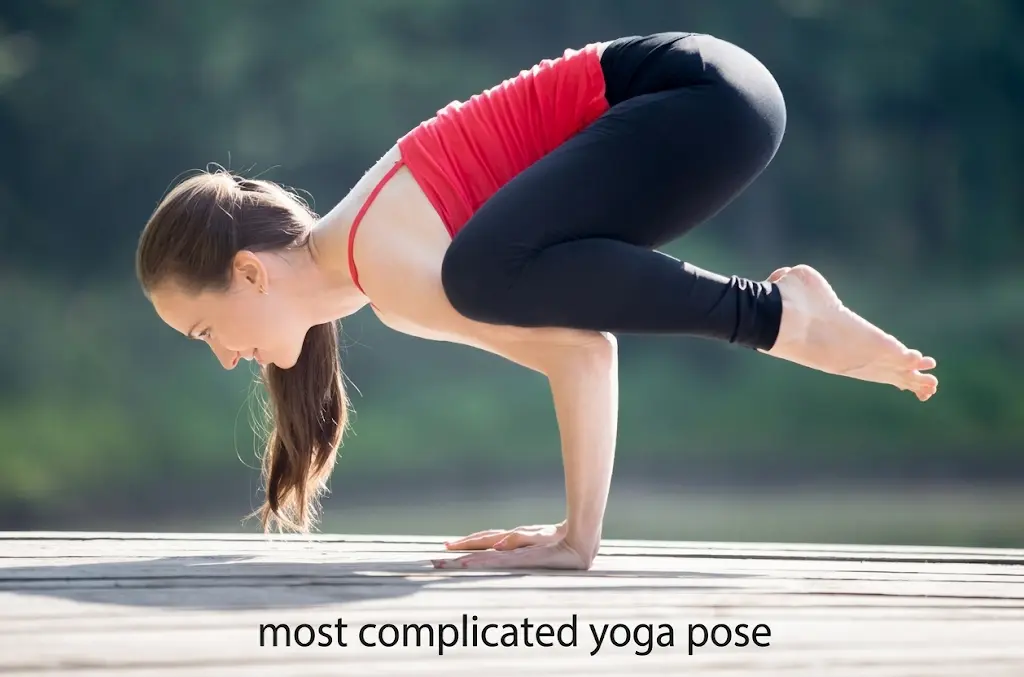
Most Complicated Yoga Pose: 6 Challenging Asanas
The most complicated yoga pose is a question with many answers, because "complicated" can mean very different things on the mat. For one person it's a gravity-defying inversion. For another it's a deep hip opener that refuses to budge. This guide breaks down what makes a pose hard, which asanas top most lists and how to work towards them safely.
Key Takeaways
- There's no single hardest pose: difficulty depends on your strength, flexibility, balance and body type.
- Scorpion handstand and Formidable Face Pose are often named the most physically complex, while deep hip openers like Duck Pose test patience and mobility.
- Build up with prep poses, warm up well and use a teacher for anything inverted or extreme.
What Makes a Yoga Pose Complicated?
A pose usually earns its reputation from a mix of four things:
- Strength: supporting your body weight on wrists, forearms or one leg
- Flexibility: deep hip, spine or shoulder mobility
- Balance: inversions and one-point supports with no margin for error
- Focus: staying calm and steady when your body wants to quit
The hardest poses combine several of these at once, which is why a handstand backbend feels harder than a plain forward fold.
Six Contenders for the Most Complicated Yoga Pose
Treat the steps below as safe preparation, not a full tutorial. Learn the final shapes with a qualified teacher.
1. Scorpion Handstand (Vrischikasana)
Often named the toughest of all, it blends inversion, a deep backbend and balance.
- Build a steady handstand or forearm balance first.
- Practise against a wall with a teacher spotting you.
- Work on shoulder and spine flexibility before bending your knees.
2. Formidable Face Pose (Gandha Bherundasana)
This intense chin-supported backbend demands extreme spinal flexibility and strong control.
- Build back flexibility with Cobra, Bridge and Wheel.
- Strengthen the upper back and neck gradually.
- Attempt the final pose only under expert supervision.
3. Eight-Angle Pose (Ashtavakrasana)
A twisting arm balance that looks like a pretzel but rewards smart technique.
- Warm up with sun salutations and side plank.
- Hook one knee high on your shoulder and plant your hands firmly.
- Cross your ankles and lean forward with bent elbows.
4. Firefly Pose (Tittibhasana)
This arm balance needs tight core control and open hamstrings and hips.
- Open the hamstrings with wide-legged forward folds.
- Practise Crow Pose for wrist strength.
- Place your hands on blocks to ease into the lift.
5. One-Legged King Pigeon (Eka Pada Rajakapotasana)
A deep hip opener and backbend in one, so flexibility is the main challenge.
- Warm up the hips with Lizard and Reclined Pigeon.
- Use a folded blanket under your front hip.
- Reach back only as far as feels comfortable.
6. Crane Pose (Bakasana)
A deep seated hip opener that looks calm but can feel intense in tight hips and knees.
- Sit and stack your shins, one directly over the other, with feet flexed.
- Lift your chest, then fold forward from the hips.
- Prop your torso on a bolster and stop if your knees complain.
Why Hip Openers Like Crane Pose Are Deceptively Hard
Arm balances and inversions get the attention, but deep hip openers humble even experienced yogis. Duck Pose has no balance or strength demand, yet tight hips, rotated knees and a stubborn lower back can make it feel impossible. The lesson is useful: a pose isn't easy just because it's low to the ground. Patience and props matter as much as effort.
How to Progress Towards Advanced Poses Safely
- Master the basics first. Plank, Chaturanga, Downward Dog and Warrior poses build the foundation.
- Warm up properly. Cold muscles and tight wrists are common injury points.
- Use props. Blocks, straps and walls make hard poses safer and more accessible.
- Break the pose into parts. Practise the strength piece and the flexibility piece separately.
- Be patient. Advanced poses often take months or years, not weeks.
- Learn from a teacher. Inversions and deep backbends are best taught in person.
When to Skip a Pose
Don't force a pose if you feel sharp pain, numbness, dizziness or pressure in the neck, wrists or knees. People with neck or back problems, high blood pressure, glaucoma, knee injuries, or who are pregnant should check with a doctor before trying inversions, extreme backbends or deep hip openers.
Conclusion
The most complicated yoga pose depends on who you ask, but the lesson is the same: difficulty is personal. Build strength, flexibility and focus step by step, respect your limits and use props and guidance along the way. Whether your goal is a Scorpion Handstand or a comfortable Duck Pose, steady progress matters more than the final shape.
FAQs
1. What is the hardest yoga pose in the world?
There's no official answer, but Scorpion Handstand and Formidable Face Pose are among the most commonly named.
2. Is Duck Pose hard?
It can be, especially if your hips or knees are tight, but props and gentle folds make it far more accessible.
3. How long does it take to master an advanced yoga pose?
It varies widely, but most advanced poses take months to years of steady practice.
4. Is it safe to try advanced yoga poses at home?
It can be risky without guidance, so learn from a teacher and read the guide to yoga safety and effectiveness before pushing your limits.
Also Read: Hard Yoga Poses
By Umesh Kumar Khiri


Discussion (0)
No comments yet. Be the first to comment!
Leave a Comment
You need to login to post a comment.