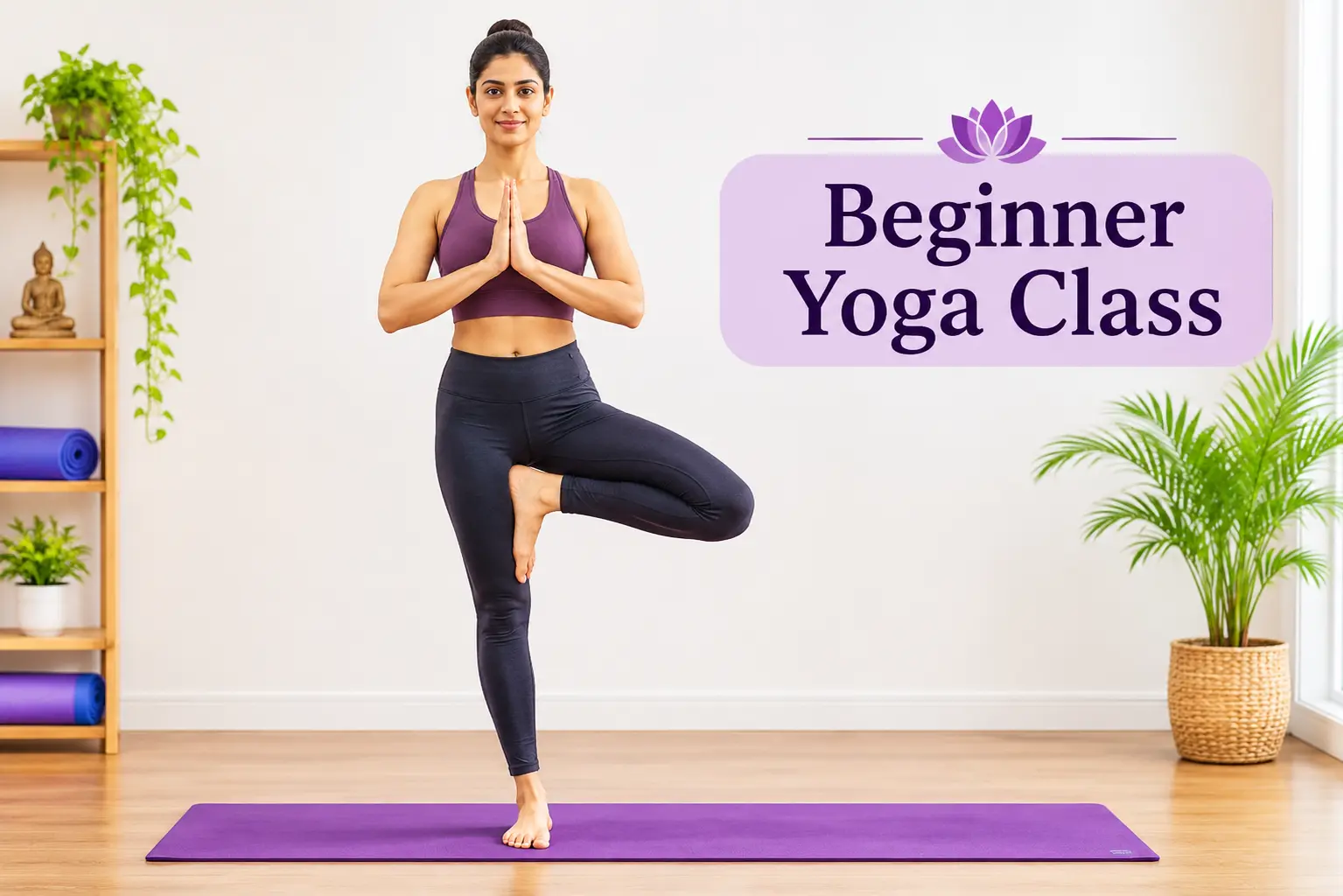
Beginner Yoga Class: Feel at Ease
Walking into your first beginner yoga class can feel more daunting than the poses themselves. The room is unfamiliar, the postures have Sanskrit names and everyone else seems to know the routine. The good news is that a well-run beginner class is designed for exactly where you are. This guide explains what happens, how to choose a class and how to prepare so that you leave feeling calm rather than confused.
Key Takeaways
- Start where you are: You don't need flexibility, fitness or experience to begin.
- Choose the right class: Look for sessions labelled beginner, gentle or foundations, with a teacher who explains each pose.
- Listen to your body: Rest whenever you need to, and let comfort guide your pace.
What Is a Beginner Yoga Class and What Happens in It?
A beginner yoga class is a session built for people who are new to yoga or returning after a long break. It moves at an unhurried pace, uses a small set of foundational poses and explains each one clearly. Teachers often offer simpler variations and props so that every body can join in.
A typical class runs between 45 and 75 minutes and follows a simple arc:
- Arrival and settling (5 minutes): You roll out your mat, and the teacher may ask about injuries or concerns.
- Breathing and warm-up (10 minutes): Slow breaths and gentle movements wake up the spine, shoulders and hips.
- Core postures (20 to 40 minutes): Standing, seated and floor poses are taught step by step, with rest in between.
- Cool-down stretches (5 to 10 minutes): Calmer, longer-held poses release tension.
- Final relaxation (5 to 10 minutes): You lie still, usually in Savasana, and let the body absorb the practice.
Choosing the Right Beginner Yoga Class
Fast, heated or advanced styles can be tough for a first visit, so build up gradually. When comparing options, check whether the teacher is certified, how large the class is and whether you can ask questions. A smaller class gives you more personal attention, and many studios offer a trial or drop-in so you can test the atmosphere.
|
|
|
|
|
|
|
|
|
|
|
|
|
|
|
|
|
|
|
|
|
|
|
|
|
|
|
|
|
|
What to Wear and Bring
Choose clothes that allow for movement without pulling or shifting. Soft and elastic material is perfect, and layers will keep you warm during relaxation. Yoga is performed barefoot, so no shoes are required.
Bring a bottle of water and a small towel. Usually, yoga studios provide mats, blocks, and straps, but it's better to make sure of that beforehand. If you purchase a mat, go for a medium-thick and non-slip mat.
How to Prepare Before Class
- Eat lightly: Have a meal at least two to three hours prior to class, or have a small snack one hour before to ensure you feel comfortable while bending.
- Arrive early: Ten minutes will be enough for finding your place, meeting your instructor and relaxing.
- Inform about your situation: If you have any injury, pregnant, suffer from high blood pressure or other diseases, inform the instructor to get a recommendation on modifications.
- Turn off your phone: This will make you concentrate and show respect to other participants.
Poses You May Meet in Your First Class
- Mountain Pose (Tadasana): Standing tall with even weight, teaching posture and balance.
- Cat-Cow (Marjaryasana-Bitilasana): A gentle spinal movement that warms the back.
- Downward-Facing Dog (Adho Mukha Svanasana): A stretch for the shoulders, back and legs.
- Child's Pose (Balasana): A resting pose you can take at any time.
- Warrior II (Virabhadrasana II): A standing pose that builds leg strength and focus.
- Tree Pose (Vrksasana): A balance pose for concentration.
- Corpse Pose (Savasana): The final relaxation.
Studio Etiquette
Arrive on time, keep your mat in your own space and keep conversation quiet. If you need to leave early, tell the teacher beforehand and place your mat near the door. Rest quietly if you feel tired instead of pushing through.
Tips to Get the Most from Your First Weeks
- Take slow breaths: Deep and easy breathing helps you relax and move easily from one pose to another.
- Props are a go: Straps, blocks, and bolsters help make the poses safe for you.
- Avoid comparisons: No two bodies are alike, and every pose will appear differently on everyone.
- Resting is important: The last resting pose is a necessary part of the practice.
- Return again: Repeat visits help you get used to the flow of the practice.
Signs of a Good Beginner Class
You should feel welcomed, receive clear instructions, be offered modifications and be encouraged to rest. Be cautious of any class that pushes you into painful poses, ignores your questions or pressures you to keep up.
Final Thoughts
Your first beginner yoga class isn't a test. It's an invitation to slow down, move gently and notice how your body feels. Choose a welcoming class, arrive prepared and let go of any need to perform. With each visit, the poses become familiar and the practice grows into a calm part of your week.
FAQs
1. What should I expect in a beginner yoga class?
Expect a slow pace, simple poses, clear instructions, breathing practice and a final relaxation. The teacher will usually offer modifications and invite you to rest whenever you need.
2. What should I wear to my first yoga class?
Wear comfortable, stretchy clothing that stays in place when you bend and fold. Practise barefoot, and bring water and a small towel.
3. Do I need to be flexible to start yoga?
No. Flexibility develops over time, and poses can be adapted to your current range of movement.
4. How often should a beginner practise yoga?
One or two classes a week is a good start, with short home sessions of yoga in between if you'd like. Regularity matters more than intensity.
Also Read: Yoga at Home
By Umesh Kumar Khiri


Discussion (0)
No comments yet. Be the first to comment!
Leave a Comment
You need to login to post a comment.