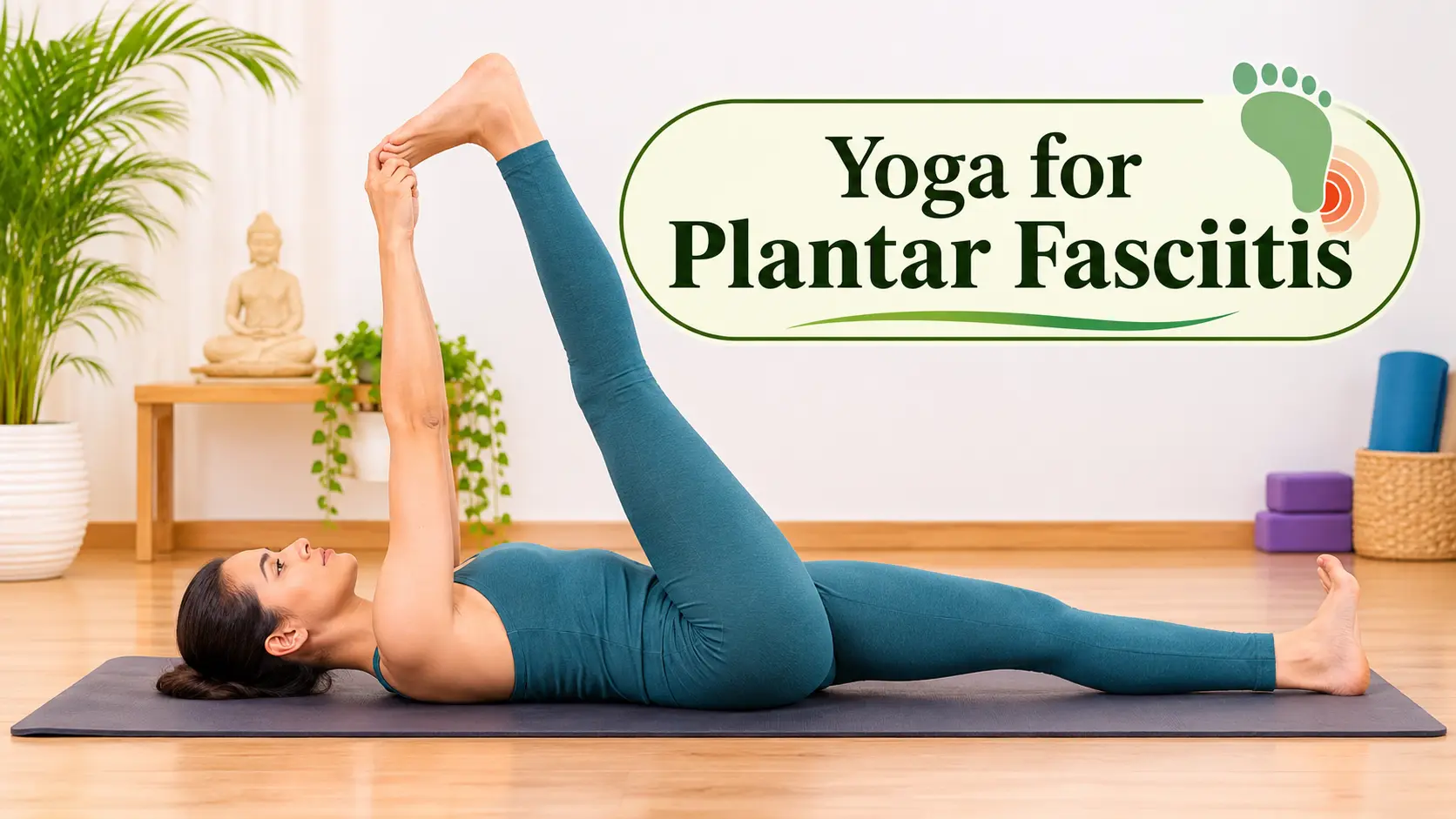
Yoga for Plantar Fasciitis: 6 Gentle Poses to Ease Heel Pain
Yoga for plantar fasciitis can calm that stabbing first-step-of-the-morning heel pain by gently stretching the calves, the soles and the hamstrings that pull on your foot. If you've been limping to the bathroom each morning, the right poses, done slowly and without pain, can make everyday walking feel easier. Yoga won't cure the problem alone, but it is a useful support to proper footwear and rest.
Key Takeaways
- Gentle stretching of the calves and soles can ease heel pain, but yoga works best alongside supportive shoes and rest.
- Aligned, pain-free poses help; deep, forced or high-impact ones can make things worse.
- See a doctor if heel pain doesn't improve within a couple of weeks or keeps getting worse.
Yoga for Plantar Fasciitis - Six Poses
Hold each for five to eight slow breaths.
1. Mountain Pose (Tadasana)
- Stand with feet hip-width apart, toes pointing forward.
- Spread your toes and press evenly through all four corners of each foot.
- Lift your arches lightly and stay tall.
2. Runner's Stretch at the Wall
- Place your hands on a wall and step one foot back, heel down.
- Lean forward until you feel a pull in the back-leg calf.
- Bend that knee slightly to reach the deeper calf muscle, then switch sides.
3. Modified Downward Dog (Adho Mukha Svanasana)
- Start on hands and knees, then lift your hips back and up.
- Keep your knees soft and press your heels gently towards the floor.
- Pedal your feet one at a time, and come down if your heels feel sore.
4. Reclining Big Toe Pose (Supta Padangusthasana)
- Lie on your back and loop a strap around one foot.
- Straighten that leg towards the ceiling, keeping the other foot against a wall or the floor.
- Draw the toes gently back to feel a stretch in the calf and hamstring.
5. Toe Stretch from Thunderbolt (Vajrasana, toes-tucked variation)
- Kneel and curl your toes under.
- Slowly sit back towards your heels.
- Stop as soon as you feel a stretch along the soles, and skip it if your toes or knees complain.
6. Legs Up the Wall (Viparita Karani)
- Sit sideways against a wall, then swing your legs up as you lie back.
- Let your feet relax and your arms rest by your sides.
- Stay for up to five minutes, then roll gently to one side.
A Simple 10-Minute Daily Routine
Do the Runner's Stretch and Reclining Big Toe Pose in the morning, ideally after a warm shower. Add Mountain Pose and Modified Downward Dog during the day, and finish with Legs Up the Wall at night. Consistency matters more than intensity, so a short daily practice beats an occasional long one.
Why the Heel Hurts
The plantar fascia is a thick band of tissue running from your heel to your toes, supporting the arch. Overuse, long hours on hard floors, worn-out shoes or sudden jumps in activity can irritate it. Tight calves and hamstrings often add extra pull. That's why yoga for plantar fasciitis focuses on the whole back of the leg, not just the foot.
Ground Rules Before You Start
- Never stretch into sharp pain. A mild pull is fine; stabbing heel pain means ease off.
- Keep your feet neutral. Press evenly through the heel, the big-toe base and the little-toe base, without letting your arches collapse or roll outward.
- Wear supportive shoes between sessions, and avoid walking barefoot on hard floors while you recover.
- Use props. A wall, strap, folded blanket or block makes each pose gentler.
Poses and Habits to Avoid While Healing
- Jumping transitions and high-impact poses that slam force into your heels
- Deep, forced toe stretches if they sharpen the pain
- Long barefoot standing on hard floors
- Pushing through pain to "get a deeper stretch"
If one pose aggravates your heel, skip it for now and return later.
Small Habits That Speed Up Relief
Roll a tennis ball or small bottle under your arch for a few minutes, stretch your calves before getting out of bed, and replace worn-out shoes. Increase walking or running time gradually, and rest when your heel flares up.
When to See a Doctor
Book an appointment if heel pain doesn't improve within about two weeks, if it keeps worsening, or if you notice swelling, numbness or pain at night. These signs may point to a different problem that needs proper assessment.
Final Thoughts
Yoga for plantar fasciitis is about patience, not pushing. Gentle calf, sole and hamstring stretches, neutral foot alignment and supportive shoes can steadily take the sting out of every step. Keep your practice short, stay consistent and speak to a doctor if your heel pain doesn't settle.
FAQs
1. Can yoga help plantar fasciitis?
Yes, gentle yoga can ease tightness in the calves and soles, but it works best alongside good footwear and rest.
2. Which yoga poses should I avoid with plantar fasciitis?
Avoid jumping, deep forced toe stretches and any pose that causes sharp heel pain.
3. Is Downward Dog good for plantar fasciitis?
It can help stretch the calves if you keep your knees soft and stay pain-free, so modify or skip it if your heels hurt.
4. How long does plantar fasciitis take to heal?
Many people improve within months, though full recovery can take up to a year. Read the guide to plantar fasciitis to learn when to seek medical help.
Also Read: Toe Yoga
By Umesh Kumar Khiri



Discussion (0)
No comments yet. Be the first to comment!
Leave a Comment
You need to login to post a comment.