Baby Cobra Yoga: Essential Steps for a Stronger, Safer Back
Baby cobra yoga is the gentle cousin of the classic cobra pose, and it is where most people should start with backbends. You lie on your belly, lift your chest just a few inches, and let your back muscles do the work. It looks almost too simple to matter. Yet that small lift wakes up the muscles that hold you upright, and it feels wonderful after a long day of sitting. This guide walks you through the pose step by step, explains what it can and cannot do for you, and points out who needs to take extra care.
Key Takeaways
- Baby cobra yoga is a low, gentle backbend done lying on your stomach.
- It strengthens the muscles along your spine and stretches the front of your body.
- Lift only a few inches and keep your hips and lower ribs on the mat.
- Your back should do the lifting, not your hands.
- Hold for three to five slow breaths and repeat a few times.
- Skip it or ask a doctor first if you have a fresh back injury, wrist pain or a pregnancy.
What Is Baby Cobra Yoga?
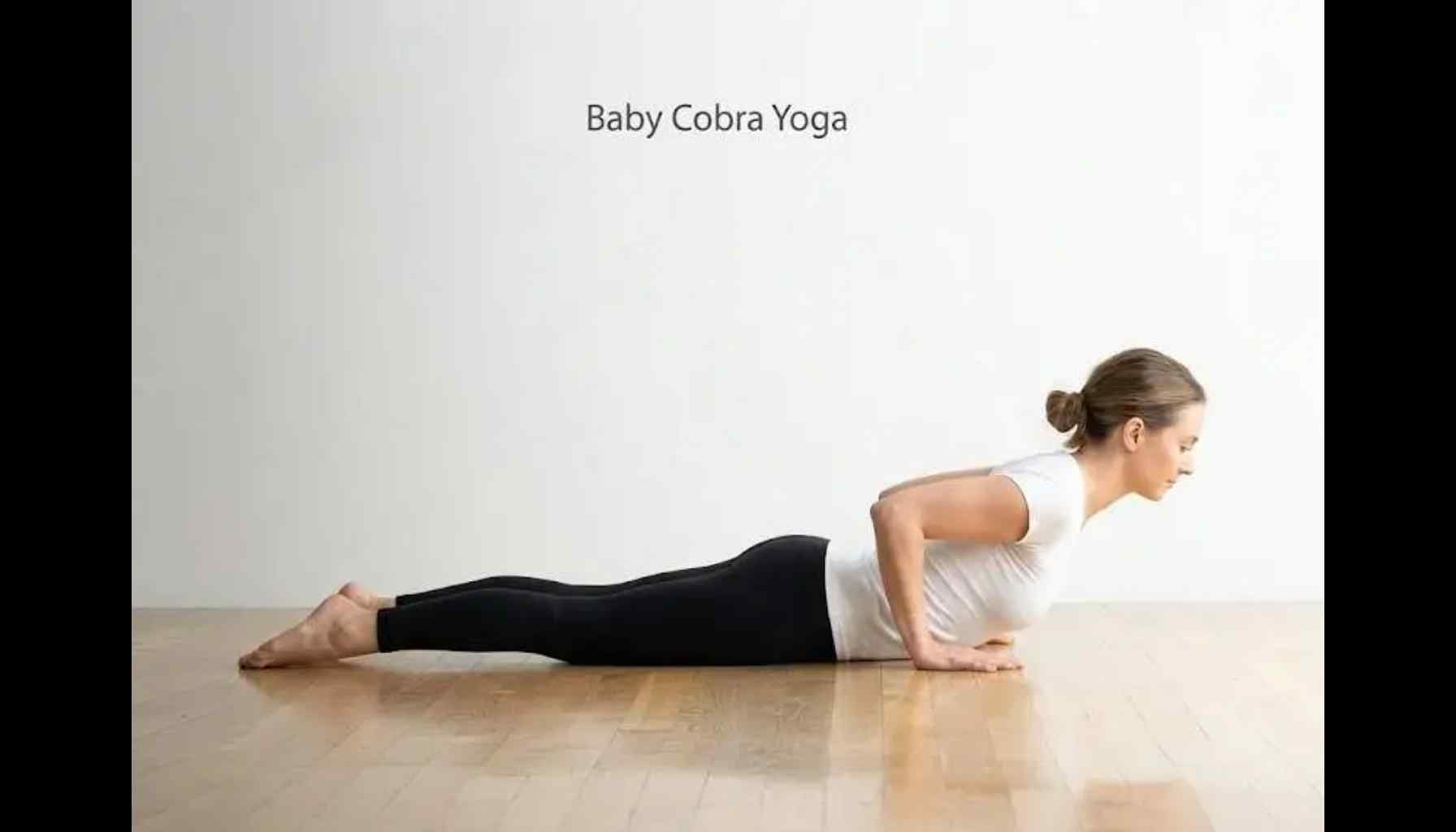
It is a beginner-friendly backbend that sits between a simple belly-down rest and a full cobra. Your legs stay long and relaxed, your elbows stay bent and tucked in, and your chest rises only slightly.
The pose belongs to the Bhujangasana family (say it boo-jang-GAHS-uh-nuh). Bhujanga is the Sanskrit word for serpent, which is how cobra pose got its name. Some teachers call the lower version half cobra, and others simply say baby cobra pose.
What sets it apart is the effort. In a deeper cobra, people often shove themselves up with their arms and fold into the lower back. Here, the goal is a smooth, even curve created by your own back strength. That is why teachers use it as a first backbend for new students.
One quick note: this guide is written for adults. If you searched for baby cobra because you want to do yoga with an infant, that is a different practice, so please check with your paediatrician first.
Benefits of Baby Cobra Yoga
Let us be realistic about what a pose this small can offer. The benefits below are modest but genuine, and they add up when you practise regularly.
Builds Back Strength
The muscles that run along your spine work to lift your chest and keep it there. Stronger spinal muscles make it easier to sit and stand tall without constant effort.
Counters Slouching
Hours at a desk or on a phone pull the shoulders forward and tighten the chest. Lifting the breastbone and drawing the shoulder blades back gives that tight area a gentle opposite stretch.
Improves Spinal Mobility
Most daily movement rounds the spine forward. This pose moves it the other way, in a controlled and low-pressure manner.
Makes Deep Breathing Easier
An open chest gives your ribs more room to expand, so slow breaths often feel fuller. Pairing the lift with an inhale and the release with an exhale also turns the pose into a small moment of calm.
You may come across claims that it detoxifies your organs or burns belly fat. Neither has solid support. Think of it as a strength and mobility move, and you will not be disappointed.
Muscles Worked in Baby Cobra Yoga
The main workers are the erector spinae, a group of long muscles beside the spine. Your glutes, hamstrings and the muscles between your shoulder blades assist, which helps keep the lift steady.
Meanwhile, the chest muscles, the abdomen and the front of the hips get a mild stretch. Your abdominals should stay lightly engaged so your lower back is supported rather than squeezed.
Warm Up Before You Begin
A cold back does not enjoy being bent, so give it a minute or two of preparation first.
- Cat-cow: Move slowly on hands and knees for about a minute to loosen the spine.
- Sphinx pose: Rest on your forearms for a few breaths to test how your back feels today.
- Locust pose: Lift your chest and legs lightly to switch on the back muscles without using your arms.
How to Do Baby Cobra Yoga, Step by Step
- Lie face down on a mat with your legs about hip-width apart and the tops of your feet resting on the floor and your toes pointing back.
- Place your palms flat under your shoulders, with your fingers spread and pointing forward. Keep your elbows bent, pointing back and hugging your ribs. Rest your forehead on the mat.
- Press the tops of your feet and your pubic bone gently into the floor. Keep your legs active but not rigid.
- Breathe in and slowly lift your head and chest a few inches, leading with your breastbone.
- Draw your shoulder blades down your back, away from your ears.
- Keep your neck long and your gaze on the floor just ahead of you.
- Lighten your hands until they could hover above the mat. This quick check shows that your back is doing the work.
- Breathe out and lower yourself with control. Turn your head to one side and rest for a breath or two.
How Long to Hold the Pose
Stay for three to five slow breaths, which is roughly 15 to 30 seconds. Repeat three to five rounds, resting between each one.
If holding feels tiring, try a rolling version. Lift on every inhale and lower on every exhale, moving with your breath. Most healthy adults can practise most days, as long as the pose feels comfortable.
Avoid practising straight after a meal, because lying on a full stomach is uncomfortable. If you are new, begin with two or three sessions a week and build up gradually.
What It Should Feel Like
A well-done lift feels like gentle effort along your spine, a mild stretch across your chest and the front of your hips, and breathing that stays easy.
Warning signs are different. Sharp or pinching pain in the lower back, tingling or numbness, and strain in the neck all mean you should lower down and ease off.
Common Mistakes in Baby Cobra Yoga
- Pushing up with your arms, which turns a back exercise into a push-up.
- Lifting too high and crunching into the lower back.
- Craning the neck upward and compressing the back of it.
- Shrugging the shoulders toward the ears.
- Clenching the glutes so hard that the lower back tightens.
- Holding your breath instead of breathing slowly.
If you feel pinching in your lower back, lower down a little. A smaller lift with good form beats a bigger lift with strain every time.
Baby Cobra vs Sphinx, Cobra and Upward-Facing Dog
These four backbends form a natural ladder, from gentlest to strongest.
- Sphinx: You rest on your forearms, so the lift is supported and very mild.
- Baby cobra: Your hands stay light, and your back creates the lift.
- Cobra (Bhujangasana): Your hands press down, the chest rises higher, and the pelvis stays grounded.
- Upward-facing dog: Your arms are straight and your thighs lift off the mat, which is a much deeper backbend.
Master the lower rungs first. Your spine will thank you.
Easy Variations of Baby Cobra Yoga
- Wider legs: Moving your feet further apart can ease pressure on the lower back.
- Sphinx start: If your wrists complain, rest on your forearms instead.
- Floating hands: Hover your palms for the whole hold to challenge your upper back.
- Neutral gaze: Keep your eyes down if looking forward strains your neck.
- Folded blanket: Place one under your hips and lower belly if your hip bones feel sore on the floor.
- Yoga blocks: Resting your hands on blocks can reduce wrist bend if your wrists feel tight.
- Wall version: If lying face down is not possible, stand facing a wall with your hands at shoulder height, step back slightly, and lean your chest forward while drawing your shoulder blades back.
Who Should Be Careful With Baby Cobra Yoga
Gentle does not mean suitable for everyone. Please check with a doctor or physiotherapist first if any of these apply to you:
- A recent back injury, or an acute disc problem.
- A condition such as spinal stenosis or spondylolisthesis, where bending backward may aggravate symptoms.
- Wrist pain, injury or carpal tunnel syndrome.
- Pregnancy, since lying on your belly becomes uncomfortable and is usually avoided as the bump grows.
- Recent abdominal surgery or a hernia.
Stop at once if you feel sharp pain, tingling, or numbness running down a leg.
Where It Fits in Your Routine
Baby cobra pose works well as a warm-up for deeper backbends, as a counter-stretch after forward folds, or as a reset at the end of a workday.
A simple mini sequence is cat-cow for a minute, three rounds of the pose, and then child's pose to release the back. It takes less than five minutes.
A Simple Three-Week Progression
If you would like to build toward a fuller backbend, go slowly and only move forward when each step feels easy.
- Week one: Practise sphinx pose for three rounds of five breaths, three days a week.
- Week two: Move to the baby version with your hands resting lightly, for three rounds of three to five breaths.
- Week three: Hover your hands and try the rolling version. If this feels comfortable, you can experiment with full cobra (Bhujangasana).
What Research Says About Yoga and Back Health
No large trials have tested this single pose on its own. The research that exists looks at whole yoga programmes, mostly for chronic low back pain. According to the National Center for Complementary and Integrative Health, American College of Physicians guidelines list yoga among the recommended non-drug options, although the evidence behind it is rated low quality.
A Cochrane review of trials reached a cautious conclusion too. It found small improvements in pain and function compared with no exercise, and it noted that some people's back pain flared up. That is one more reason to keep the movement small and listen to your body.
Frequently Asked Questions
What is baby cobra yoga good for?
It is mainly good for building gentle back strength, easing a stiff chest and shoulders, and improving posture awareness. It also works as a safe stepping stone toward fuller backbends.
How long should you hold baby cobra pose?
Hold it for three to five slow breaths, or about 15 to 30 seconds. Repeat it three to five times. Quality matters more than duration, so lower down as soon as your form slips.
Can baby cobra pose help with sciatica?
It depends on the cause. Some people with sciatica find that gentle back extension eases their symptoms, while others find that it makes leg pain worse. If pain, tingling or numbness runs down your leg, check with a doctor or physiotherapist first, and stop if symptoms spread or increase.
Is baby cobra yoga good for lower back pain?
It may help some people with general, long-standing stiffness, since it builds back strength gently. However, it can irritate certain conditions. If your pain is new, severe or travels down a leg, speak to a healthcare professional before trying it.
Can you do baby cobra yoga while pregnant?
Most prenatal teachers avoid belly-down poses as pregnancy advances. Ask your doctor or a trained prenatal instructor about safer options for chest opening.
Is baby cobra the same as half cobra?
Often yes. Teachers use “half cobra” and “baby cobra” for the same low version, though some use half cobra for a slightly higher lift. Follow your teacher’s cues.
Can I do baby cobra after having a baby?
Ask your doctor or a postnatal physiotherapist when to start, especially after a C-section or if your abdominal muscles have separated.
Does baby cobra reduce belly fat?
No. There’s no evidence a single pose burns fat in one area. It’s a back-strength and mobility move.
Bottom Line
Baby cobra yoga proves that a small movement, done well, can be worth more than a dramatic one. It strengthens the back, opens a tight chest and fits into almost any routine in a few minutes. Keep the lift low, let your back muscles lead, and breathe slowly. If you have an injury or a medical condition, get a professional opinion first, and then enjoy the pose at your own pace.

Discussion (0)
No comments yet. Be the first to comment!
Leave a Comment
You need to login to post a comment.